
 Kontakt
 Kako nakupovati

Dostava
Svetovalec pri nakupu
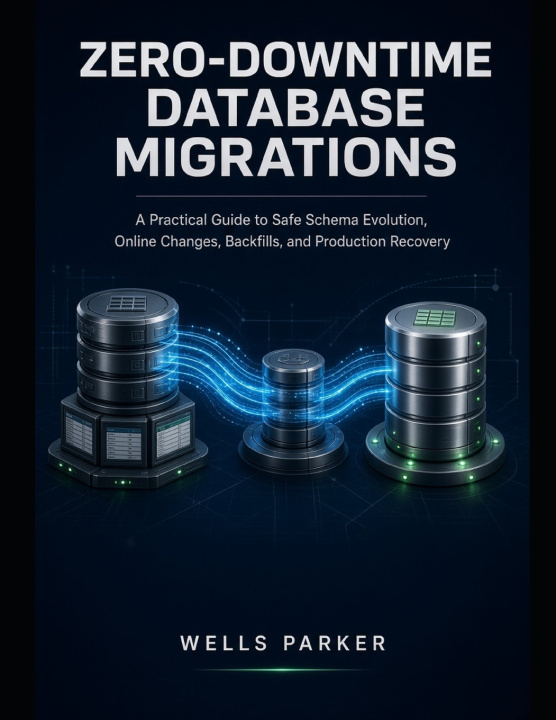
ZERO-DOWNTIME DATABASE MIGRATIONS
A Practical Guide to Safe Schema Evolution, Online Changes, Backfills, and Production Recovery
 Angleščina
 52 b
 Novo
Do 30 dni za vračilo

How do you change a production database without bringing an application to a halt?
A database migration is rarely just a matter of executing an SQL script. A schema change can introduce application incompatibilities, acquire unexpected locks, disrupt transactions, create inconsistent data, or turn a routine deployment into a production incident. The real challenge is coordinating database and application changes while live systems continue serving users.
Zero-Downtime Database Migrations is a practical guide to planning, executing, validating, and recovering from database changes in production environments. It treats migration as an engineering process-not an isolated DDL statement-and shows how to reduce risk through compatibility, sequencing, controlled data movement, and operational verification.
INSIDE THIS BOOK, YOU WILL LEARN:
- Assess database dependencies, migration risks, and readiness before changing production.
- Apply expand-and-contract techniques to evolve schemas while old and new application versions coexist.
- Understand DDL locking, transactions, and database behavior that can affect availability.
- Add, replace, and remove columns, tables, indexes, and constraints safely.
- Plan backfills and large-scale data transformations without overwhelming live systems.
- Use dual writes and change capture while keeping data synchronized.
- Validate migrated data through reconciliation, consistency checks, and cutover-readiness testing.
- Coordinate application releases and migration orchestration.
- Choose rollback, roll-forward, and recovery strategies when a change fails.
- Improve migration observability, automation, and governance.
The book uses PostgreSQL 16 as its primary practical platform, with selected coverage of SQL Server and MySQL. It progresses from migration fundamentals and backward-compatible schema evolution to data transformation, deployment operations, failure recovery, and an end-to-end capstone performed under production-like conditions.
You will learn to evaluate more than whether a migration script succeeds. You will consider lock duration, application compatibility, data correctness, deployment order, observability, and the recovery path before the change reaches production.
WHO SHOULD READ THIS BOOK?
Designed for professional software developers, database engineers, database administrators, backend developers, DevOps and SRE practitioners, platform teams, technical leads, and architects responsible for systems that cannot afford avoidable downtime.
Change the schema without losing control of the service. Protect data integrity, coordinate application releases, and make production database migrations more predictable.


O knjigi
Angleščina

Podarite to knjigo še danes
To je povsem preprosto
1 Dodajte knjigo v košarico in izberite dostavo kot darilo 2 V zameno vam bomo poslali kupon 3 Knjiga bo dostavljena na naslov obdarovancaPozdravljeni! Sem Libroamiko, vaš knjižni svetovalec.
Kako vam lahko pomagam?