
 Kontakt
 Kako nakupovati
Dostava
Svetovalec pri nakupu
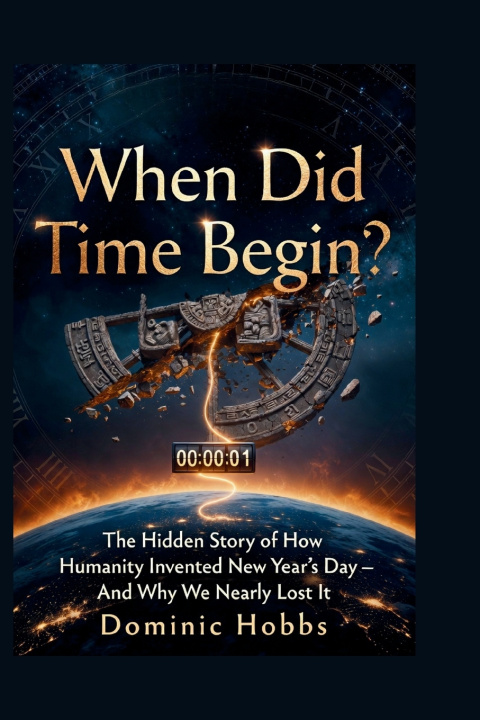
When Did Time Begin?
The Hidden Story of How Humanity Invented New Year's Day - And Why We Nearly Lost It
 Angleščina
 44 b
44 b
Do 30 dni za vračilo

When Did Time Begin? The Hidden Story of How Humanity Invented New Year's Day - And Why We Nearly Lost It
Every year, billions of people across the globe celebrate the arrival of a new year. We count down to midnight, make resolutions, kiss loved ones, and watch fireworks light up the sky. But have you ever stopped to wonder why we celebrate on 1 January? Or why does this arbitrary date hold such power over our lives?
The answer is far stranger and more fascinating than you might imagine.
This book takes you on an extraordinary journey through 10,000 years of human history, revealing how our ancestors invented time itself. From wolf bones scratched with lunar phases to Stonehenge's astronomical alignments, from Babylonian priests who controlled empires through calendar knowledge to Pope Gregory XIII's controversial reform that eliminated ten days from existence, this is the untold story of humanity's most obsessive: marking time and celebrating its passage.
You'll discover why ancient Egyptians celebrated New Year in July, how Julius Caesar accidentally created a calendar that gained a day every 128 years, and why Britain rioted when the government "stole" eleven days in 1752. You'll learn about the twelve grapes of Spain, Scotland's first-footing traditions, and why the Chinese New Year creates the largest human migration on Earth.
But this isn't just a history book. It's an exploration of why fresh starts matter, how collective rituals shape society, and what our celebrations reveal about the human condition. Drawing on archaeology, psychology, sociology, and cultural anthropology, this book examines how a single moment - midnight on 1 January - connects billions of people across cultures, religions, and continents.
Along the way, you'll encounter:
- The wolf bone from 20,000 years ago that proves humans have always been obsessed with tracking time
- The Babylonian festival where kings were ritually humiliated to renew their divine right to rule
- How Times Square accidentally became the centre of global New Year celebrations
- The psychological science behind why New Year resolutions actually work (when done properly)
- Why fireworks became the universal language of celebration
- The environmental cost of our modern festivities
- How authoritarian regimes manipulate or suppress New Year traditions
- The indigenous peoples fighting to reclaim their traditional calendars after centuries of colonial imposition
This book challenges Western assumptions by presenting a truly global perspective. From Persian Nowruz to Jewish Rosh Hashanah, from Hindu Diwali to the Islamic New Year, you'll see how different cultures answer the same fundamental human need: the psychological necessity of fresh starts.
Written in clear, engaging prose free from academic jargon, this book is for anyone who has ever wondered why we do what we do when the clock strikes midnight. It's for history enthusiasts, culture lovers, and curious minds who want to understand the hidden forces that shape our modern world.
By the end, you'll never look at New Year the same way again. You'll understand that this ancient celebration - older than writing, older than cities, perhaps older than agriculture itself - reveals something profound about what it means to be human: our eternal hope that tomorrow can be better than today.


O knjigi
Angleščina

Podarite to knjigo še danes
To je povsem preprosto
1 Dodajte knjigo v košarico in izberite dostavo kot darilo 2 V zameno vam bomo poslali kupon 3 Knjiga bo dostavljena na naslov obdarovancaPozdravljeni! Sem Libroamiko, vaš knjižni svetovalec.
Kako vam lahko pomagam?