
 Kontakt
 Kako nakupovati
Dostava
Svetovalec pri nakupu
 Angleščina
 25 b
25 b
 Novo
Novo
Do 30 dni za vračilo

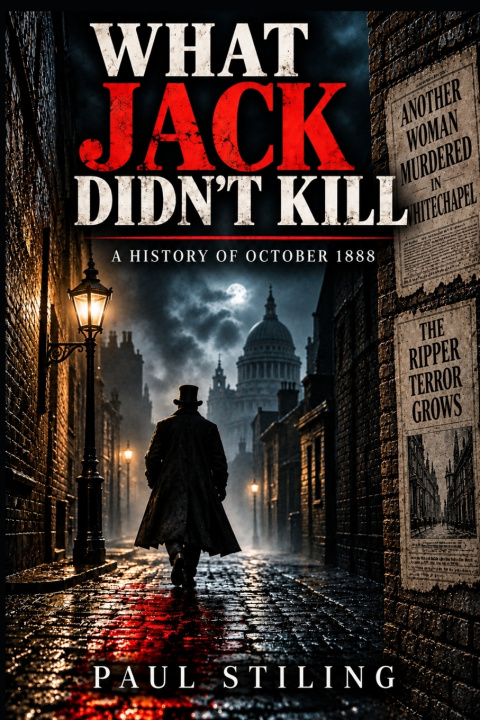
What happened when Jack the Ripper stopped killing?
For five and a half weeks in the autumn of 1888, London waited.
Whitechapel had already been transformed by the murders of Mary Ann Nichols, Annie Chapman, Elizabeth Stride and Catherine Eddowes. But after the "Double Event" at the end of September, the killings fell silent.
The silence did not.
Instead, October 1888 became one of the strangest months in the history of true crime.
Letters arrived claiming to be from the killer. The name "Jack the Ripper" entered the public imagination. A postcard appeared to predict the murders. A parcel containing half a human kidney arrived at the home of Whitechapel Vigilance Committee chairman George Lusk. Bloodhounds were brought to London in an extraordinary attempt to track an invisible murderer. Psychics offered their services. Newspapers competed to turn rumour into headlines. Innocent men were accused, followed and publicly branded as suspects.
And beneath it all, the women of Whitechapel continued to live with the fear.
What Jack Didn't Kill is not another attempt to solve the Ripper mystery.
Instead, Paul Stiling examines the extraordinary machinery that grew around an unsolved crime: the newspapers that discovered how profitable fear could be, the police struggling under unprecedented public pressure, the rumours that became accepted as fact, the letters that helped create a legend, and the people who found themselves caught inside a story they could not control.
Drawing on the events, personalities and evidence of October and early November 1888, this is the story of what happened in the space left behind when the killer was silent.
Because Jack the Ripper did not need to kill to remain present.
London did the rest.


O knjigi
Angleščina

Podarite to knjigo še danes
To je povsem preprosto
1 Dodajte knjigo v košarico in izberite dostavo kot darilo 2 V zameno vam bomo poslali kupon 3 Knjiga bo dostavljena na naslov obdarovancaPozdravljeni! Sem Libroamiko, vaš knjižni svetovalec.
Kako vam lahko pomagam?