
 Kontakt
 Kako nakupovati
Dostava
Svetovalec pri nakupu
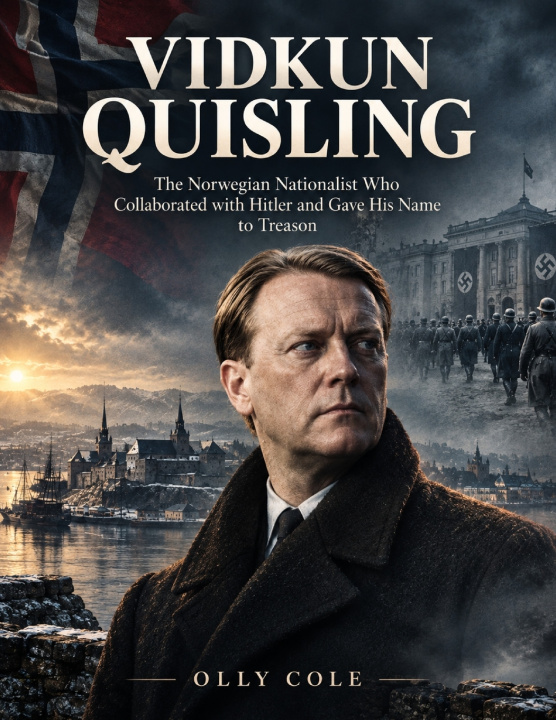
Vidkun Quisling
The Norwegian Nationalist Who Collaborated with Hitler and Gave His Name to Treason
 Angleščina
 47 b
47 b
 Kmalu
Kmalu
 Novo
Novo
Do 30 dni za vračilo

Vidkun Quisling: The Norwegian Nationalist Who Collaborated with Hitler and Gave His Name to Treason
His own name became a word for betrayal before the war that defined him had even reached its halfway point.
On the evening of April 9, 1940, as German forces stormed ashore along the Norwegian coast, a radio broadcast interrupted the chaos of invasion. A Norwegian officer, speaking in the confident tones of a man seizing his destiny, declared himself Prime Minister of a country that had never elected him and barely knew his name. Within days, The Times of London had coined a term for what he represented, and the word quisling entered the English language as a permanent synonym for treachery.
But the man behind that broadcast had not always been destined for infamy. Vidkun Quisling was born into a respected clerical family in rural Telemark, a prodigy whose brilliance earned him a personal audience with Norway's king while he was still a teenager. He went on to witness the collapse of Imperial Russia firsthand, worked alongside the celebrated explorer Fridtjof Nansen to save millions of lives during a catastrophic famine, and earned international honors, including recognition from the British Crown, for genuine humanitarian service. He was, by every early measure, a man of real talent and real conviction.
This book traces the full and often startling arc of that life, from a Telemark parsonage to a firing squad at Akershus Fortress, following Quisling through revolution and civil war in Russia, the political failures of a fascist party that Norwegian voters rejected not once but twice, and the fateful decision that transformed a marginal political figure into the head of a collaborationist government. It examines his role in the German invasion of Norway, his government's complicity in the deportation of Norwegian Jews to Auschwitz, and the remarkable civil resistance, led by teachers, bishops, and ordinary citizens, that denied his regime any genuine legitimacy throughout five years of occupation.
Readers interested in the Second World War, the history of Nazi collaboration, or the broader question of how ideological conviction can curdle into catastrophic betrayal will find in Quisling's story a case study unlike any other. His life resists easy explanation. He was neither a simple villain born to treachery nor an innocent swept along by forces beyond his control, but something more unsettling: a man of genuine gifts who convinced himself, through two decades of accumulating grievance and fear, that betraying his nation's sovereignty was the surest way to save it.
Drawing on the historical record of his extraordinary and destructive career, this book offers a clear-eyed account of how one man's name came to mean something no one wants to be called, and what his life reveals about the fragile line between conviction and catastrophe.


O knjigi
Angleščina

Podarite to knjigo še danes
To je povsem preprosto
1 Dodajte knjigo v košarico in izberite dostavo kot darilo 2 V zameno vam bomo poslali kupon 3 Knjiga bo dostavljena na naslov obdarovancaPozdravljeni! Sem Libroamiko, vaš knjižni svetovalec.
Kako vam lahko pomagam?