
 Kontakt
 Kako nakupovati
Dostava
Svetovalec pri nakupu
 Angleščina
 43 b
43 b
 Novo
Novo
30 dni za vračilo blaga

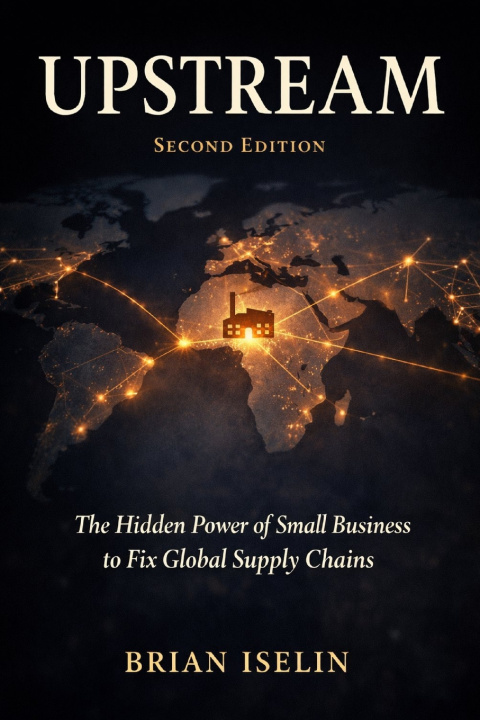
The companies most people have never heard of are the ones with the most power to change the world. This book explains why - and shows them how.
Every morning, somewhere in your supply chain, something happens that you did not order and do not know about. Workers in debt bondage on fishing vessels. Factories that pass audits and run forced overtime. Children in mines whose cobalt ends up in devices sold in your shop. Not as exceptions. As standard conditions in global supply chains that were designed, at every tier, to keep that information away from the companies who could actually do something about it.
Those companies are small businesses. Maybe yours.
Upstream is the book the compliance industry does not want small business owners to read - because it demolishes the central myth that human rights due diligence is a large-company problem requiring large-company resources. Drawing on thirty years of field experience as a UN advisor, Federal Agent, and counter-slavery practitioner, Brian Iselin shows that small and medium businesses occupy a uniquely powerful position in the global supply chain: close enough to the source to see what's actually there, agile enough to act on it, and - when they choose to - impossible to ignore.
What you'll find inside:
- Why "I didn't know" stopped being a legal defence in 2011 - and what the regulatory wave building since then means for your business right now
- How a small UK chocolate company got a major Colombian processor to open its supply chain - using nothing but ethical leverage
- Why the audit industry sells certainty it cannot deliver, and what actually works instead
- The half-day supply chain map that reveals your real human rights exposure
- How small companies in the same sector are solving together what none of them could solve alone
- A 90-day quick-start plan, practical toolkits, and a 20-question human rights health check you can complete this week
The regulations are coming - the EU Corporate Sustainability Due Diligence Directive, the German Supply Chain Act, the Norwegian Transparency Act, US forced labour import bans. The companies that treat this as a competitive opportunity rather than a compliance burden are already winning sourcing contracts, attracting talent, and building supply chain relationships that hold when the next crisis hits.
You do not need to be large to matter upstream. You need to be intentional.
Upstream is for founders, owners, and leaders of small and medium businesses who are ready to stop waiting for someone else to fix the problem - and start with what they can actually do.


O knjigi
Angleščina
