
 Kontakt
 Kako nakupovati
Dostava
Svetovalec pri nakupu
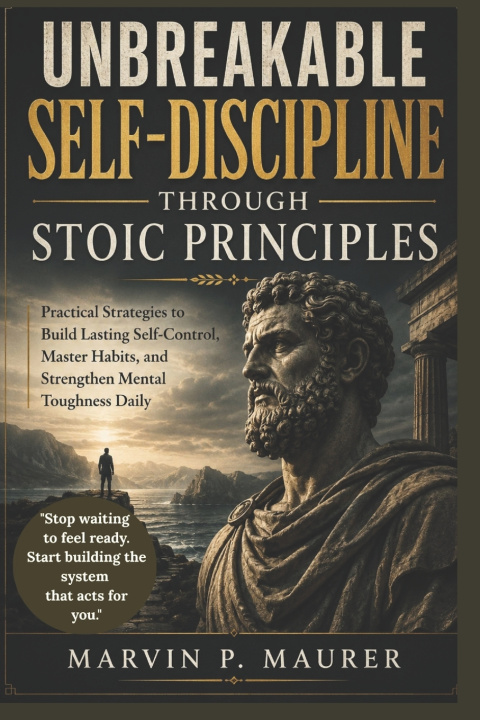
Unbreakable Self-Discipline Through Stoic Principles
Practical Strategies to Build Lasting Self-Control, Master Habits, and Strengthen Mental Toughness Daily
 Angleščina
 44 b
44 b
 Novo
Novo
Do 30 dni za vračilo

You already know what you need to do. The question that has never been answered is why you keep not doing it.
Most failed attempts at discipline begin with genuine excitement. The intention is sincere, the objective matters, and the commitment feels strong in the beginning. Yet within a few weeks, momentum fades and routines collapse. The issue is rarely ambition. The real weakness is that the entire strategy depended on emotion, and emotion was never built to carry long-term responsibility.
Inside these pages, you will find:
- The neurological reason motivation fails by week three - and the structural alternative the Stoics built two millennia ago
- A plain-language breakdown of Stoic philosophy's four core principles, each translated into a specific, usable behavioral tool
- A personal discipline audit that identifies exactly where your system breaks - not where you assume it does
- A morning framework drawn from Marcus Aurelius's actual daily practice - adapted for the realities of a modern schedule
- The 90-Second Impulse Wall - a neuro-behavioral interruption protocol for the moments when everything unravels
- An environment redesign protocol that reduces the number of decisions your discipline has to fight each day
- An emotional discipline framework addressing the four states - boredom, anxiety, shame, resentment - that most reliably dismantle follow-through
- A Hard Day Protocol built specifically for the days when nothing is working, because those are the days that determine everything
- A long-term compounding system for building consistency that survives life changes, identity shifts, and years - not just sprints
A final, unified Stoic Discipline Blueprint the reader designs and carries forward as a personal operating standard
Marcus Aurelius, Epictetus, and Seneca approached discipline as daily training. They were not detached philosophers speaking in theory. They practiced emotional control, self-observation, and deliberate action under pressure. Marcus Aurelius managed war, political instability, and personal hardship while continuously examining his own behavior to identify weaknesses and improve performance. That same process of reflection and correction forms the foundation of this guide.
Across fifteen carefully organized chapters, readers move from understanding the psychology of inconsistency to building practical systems that strengthen follow-through. The book explains why motivation naturally declines, how environments quietly shape behavior, and why emotional states such as anxiety, resentment, shame, and boredom frequently disrupt progress.
The goal is not perfection or constant intensity. The goal is building a dependable structure that continues operating when enthusiasm disappears. Consistency becomes possible when actions are supported by systems rather than emotion alone.
For readers who have tried productivity advice, motivational content, accountability methods, or habit tracking without lasting success, this book focuses on the deeper layer beneath those tools. Discipline is not a fixed personality trait reserved for a fortunate few. It is a trainable capacity strengthened through repetition, awareness, and deliberate practice.
The Stoics believed character was built through action repeated over time. That principle remains true today. Lasting self-control is not created in moments of inspiration, but through steady choices practiced daily until they become part of who you are.
The system is ready. The only remaining question is whether you are going to build it or wait until you feel like it.

O knjigi
Angleščina

Podarite to knjigo še danes
To je povsem preprosto
1 Dodajte knjigo v košarico in izberite dostavo kot darilo 2 V zameno vam bomo poslali kupon 3 Knjiga bo dostavljena na naslov obdarovancaPozdravljeni! Sem Libroamiko, vaš knjižni svetovalec.
Kako vam lahko pomagam?