
 Kontakt
 Kako nakupovati
Dostava
Svetovalec pri nakupu
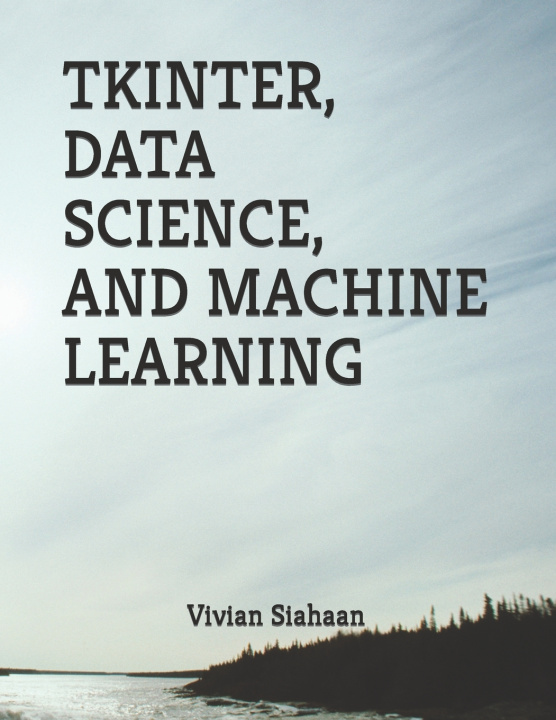
TKINTER, DATA SCIENCE, AND MACHINE LEARNING
 Angleščina
 44 b
44 b
30 dni za vračilo blaga

In this project, we embarked on a comprehensive journey through the world of machine learning and model evaluation. Our primary goal was to develop a Tkinter GUI and assess various machine learning models on a given dataset to identify the best-performing one. This process is essential in solving real-world problems, as it helps us select the most suitable algorithm for a specific task. By crafting this Tkinter-powered GUI, we provided an accessible and user-friendly interface for users engaging with machine learning models. It simplified intricate processes, allowing users to load data, select models, initiate training, and visualize results without necessitating code expertise or command-line operations. This GUI introduced a higher degree of usability and accessibility to the machine learning workflow, accommodating users with diverse levels of technical proficiency.
We began by loading and preprocessing the dataset, a fundamental step in any machine learning project. Proper data preprocessing involves tasks such as handling missing values, encoding categorical features, and scaling numerical attributes. These operations ensure that the data is in a format suitable for training and testing machine learning models.
Once our data was ready, we moved on to the model selection phase. We evaluated multiple machine learning algorithms, each with its strengths and weaknesses. The models we explored included Logistic Regression, Random Forest, K-Nearest Neighbors (KNN), Decision Trees, Gradient Boosting, Extreme Gradient Boosting (XGBoost), Multi-Layer Perceptron (MLP), and Support Vector Classifier (SVC).
For each model, we employed a systematic approach to find the best hyperparameters using grid search with cross-validation. This technique allowed us to explore different combinations of hyperparameters and select the configuration that yielded the highest accuracy on the training data. These hyperparameters included settings like the number of estimators, learning rate, and kernel function, depending on the specific model.
After obtaining the best hyperparameters for each model, we trained them on our preprocessed dataset. This training process involved using the training data to teach the model to make predictions on new, unseen examples. Once trained, the models were ready for evaluation.
We assessed the performance of each model using a set of well-established evaluation metrics. These metrics included accuracy, precision, recall, and F1-score. Accuracy measured the overall correctness of predictions, while precision quantified the proportion of true positive predictions out of all positive predictions. Recall, on the other hand, represented the proportion of true positive predictions out of all actual positives, highlighting a model's ability to identify positive cases. The F1-score combined precision and recall into a single metric, helping us gauge the overall balance between these two aspects.
To visualize the model's performance, we created key graphical representations. These included confusion matrices, which showed the number of true positive, true negative, false positive, and false negative predictions, aiding in understanding the model's classification results. Additionally, we generated Receiver Operating Characteristic (ROC) curves and area under the curve (AUC) scores, which depicted a model's ability to distinguish between classes. High AUC values indicated excellent model performance.
Furthermore, we constructed true values versus predicted values diagrams to provide insights into how well our models aligned with the actual data distribution. Learning curves were also generated to observe a model's performance as a function of training data size, helping us assess whether the model was overfitting or underfitting.


O knjigi
Angleščina
