Brezplačna dostava za naročila nad 69,99 € na prevzemna mesta DPD in Express One.

Postanite del skupnosti ljubiteljev knjig z vsega sveta in uživajte v številnih ugodnostih.
Ustvarite brezplačen račun
Brezplačna dostava Zásilkovna nad 69.99 €
Zbirna točka GLS 4.49 €
Zbirna točka DPD 2.99 €
Kurirska služba GLS 5.49 €
Kurir DPD 3.49 €
Kurirska služba Express One 3.49 €
Zbirno mesto Express One 3.49 €
Zbirno mesto Pošte Slovenije 3.49 €
Dostava preko Pošte Slovenije 3.49 €
 Kontakt
 Kako nakupovati
Pomoč
Dostava
Zbirna točka GLS 4.49 €
Zbirna točka DPD 2.99 €
Kurirska služba GLS 5.49 €
Kurir DPD 3.49 €
Kurirska služba Express One 3.49 €
Zbirno mesto Express One 3.49 €
Zbirno mesto Pošte Slovenije 3.49 €
Dostava preko Pošte Slovenije 3.49 €
Brezplačna dostava Zásilkovna nad 69.99 €
Svetovalec pri nakupu
Moj račun
▸
Prazna :-(
0
Brezplačna dostava za naročila nad 69,99 € na prevzemna mesta DPD in Express One.
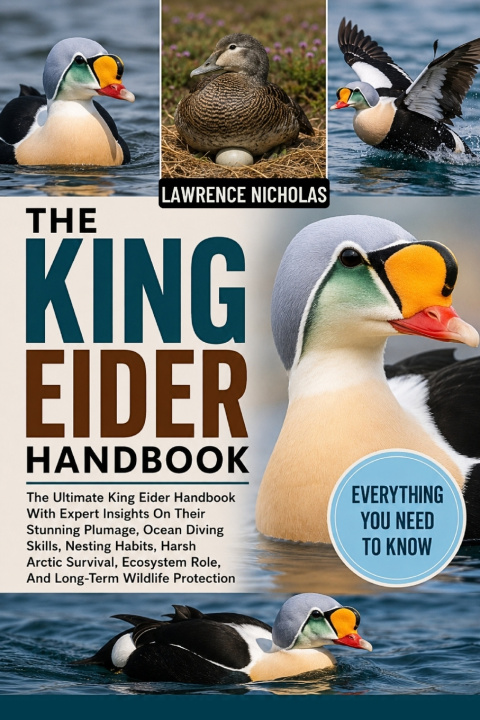
THE KING EIDER HANDBOOK
The Ultimate King Eider Handbook With Expert Insights On Their Stunning Plumage, Ocean Diving Skills, Nesting Habits, Harsh Arctic Survival, Ecosystem Role, And Long-Term Wildlife Protection
Jezik
 Angleščina
Angleščina
Knjiga
Mehka
INTRODUCTIONIntroductionUnderstanding The King EiderThe King Eider is one of the most remarkable sea...
Celoten opis
Koda Libristo: 52554434
?
 39 b
39 b
 Novo
Novo
39 b
Novo
16.19
€
Na zalogi pri dobavitelju
Odposlali bomo v 14-21 dneh
Do 30 dni za vračilo

INTRODUCTION
Introduction
Understanding The King Eider
The King Eider is one of the most remarkable sea ducks found in the northernmost regions of the world. Living in some of the coldest and harshest environments on Earth, this striking bird has captured the attention of birdwatchers, researchers, wildlife photographers, and Arctic communities for generations. With its vivid appearance, powerful survival instincts, and ability to thrive in icy coastal waters where many animals would struggle to survive, the King Eider stands as a symbol of endurance, adaptation, and natural beauty in the Arctic wilderness.The King Eider belongs to the sea duck family and is scientifically known for its close relationship with northern marine ecosystems. Unlike freshwater ducks commonly seen in ponds and rivers, King Eiders are specially adapted to life in coastal Arctic environments where freezing temperatures, strong ocean currents, and seasonal darkness shape every aspect of survival. Their lives are deeply connected to the rhythms of the Arctic Ocean, from migration and feeding to breeding and raising their young in remote tundra landscapes.
One of the first things people notice about the King Eider is its extraordinary appearance. The adult male is especially famous for its colorful plumage and unique facial markings. During the breeding season, males display soft blue-gray crowns, pale green cheeks, orange and red beaks, black-and-white feather patterns, and a striking body shape that immediately separates them from most other ducks. Their appearance looks almost artistic, as if designed specifically to stand out against the icy landscapes of the far north. Females, while less colorful, possess beautifully patterned brown feathers that provide important camouflage during nesting season. This natural camouflage allows them to remain hidden from predators while protecting eggs and ducklings in exposed Arctic environments.
The King Eider's physical design is not only beautiful but also highly functional. Thick layers of insulating feathers help these birds maintain body heat even while swimming in near-freezing waters. Their compact bodies reduce heat loss, while specialized blood circulation systems help conserve warmth in cold conditions. Their powerful legs and webbed feet allow them to dive efficiently underwater in search of food. Every part of the King Eider's anatomy reflects millions of years of adaptation to extreme northern habitats.
King Eiders are found across Arctic regions of North America, Greenland, northern Europe, and parts of Siberia. Their distribution stretches across some of the most remote coastal environments in the world. During breeding season, they travel inland to Arctic tundra areas filled with lakes, wetlands, and open nesting grounds. Once breeding ends, they return to coastal waters where they spend much of their lives feeding and surviving in marine ecosystems. These seasonal movements are part of impressive migration patterns that often cover enormous distances across icy oceans and northern coastlines.
The Arctic world where King Eiders live is both beautiful and unforgiving. Temperatures can fall far below freezing, storms can arrive suddenly, and food availability often changes with the seasons. Yet the King Eider has evolved to survive these challenges with remarkable efficiency. They are strong divers capable of reaching underwater prey hidden beneath cold ocean surfaces. Mussels, clams, sea snails, crustaceans, and other marine organisms form much of their diet. Their ability to forage in deep coastal waters allows them to survive in places where fewer competitors exist.
Igralka
&
Poliglotka
EWA KASP
za
Predvajaj video


Libristo ima največjo izbiro tujejezične literature. Zato svoje knjige kupujem tukaj.
O knjigi
Polni naslov
THE KING EIDER HANDBOOK
Avtor
LAWRENCE NICHOLAS
Jezik
Angleščina
Angleščina
Vezava
Knjiga - Mehka
Datum izida
2026
Število strani
218
EAN
9798198874619
Koda Libristo
52554434
Založba
Independently published
Teža
299
Mere
152 x 229 x 12

Podarite to knjigo še danes
To je povsem preprosto
1 Dodajte knjigo v košarico in izberite dostavo kot darilo 2 V zameno vam bomo poslali kupon 3 Knjiga bo dostavljena na naslov obdarovanca
Knjižni svetovalec Libroamiko
Z uporabo tega klepeta komunicirate z generativno umetno inteligenco. Z njegovo uporabo se strinjate tudi z obdelavo osebnih podatkov.
Pozdravljeni! Sem Libroamiko, vaš knjižni svetovalec.
Kako vam lahko pomagam?
Pozdravljeni, sem Libroamiko, vam lahko pomagam?