
 Kontakt
 Kako nakupovati
Dostava
Svetovalec pri nakupu
 Angleščina
 34 b
34 b
 Novo
Novo
30 dni za vračilo blaga

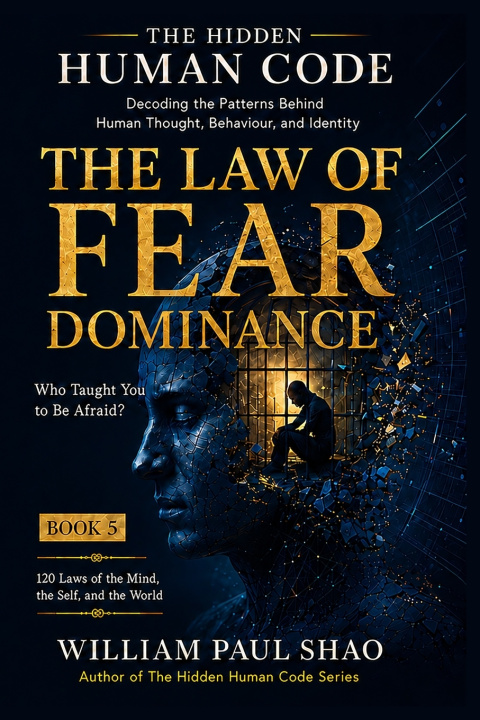
The Hidden Human Code: Book Five-The Law of Fear Dominance
Who taught you to be afraid?
That question sits at the heart of William Shao's fifth entry in The Hidden Human Code series-and it's one most people spend their entire lives never thinking to ask.
This isn't a book about the fears you can name. It's about the ones you can't see-the ones so thoroughly woven into your sense of reality that they stopped feeling like fear long ago. They feel like caution. Prudence. Knowing your limits. Common sense.
They are not.
Drawing on neuroscience, developmental psychology, philosophy, and history, Shao maps what he calls The Law of Fear Dominance-the mechanism by which fear becomes the invisible architect of a life. Before you had language, before you had memory, your nervous system was already learning whether the world was safe. It learned from the emotional temperature of the people nearest to you. It learned things you never chose to believe, and it has been building from that foundation ever since.
Through vivid, precisely drawn narratives-a woman who can't send an email she's already written, a boy who knows the answer and stays silent, a couple arguing about Christmas when the real question is three years old-Shao shows how fear doesn't announce itself. It arrives as procrastination. As "not the right time." As the elaborate, entirely reasonable excuse that sounds, even to the person speaking it, completely true.
At the center of the book is what Shao calls The Glass Room: a space of complete visibility and perfect paralysis, where you can see everything you want and reach none of it. Not because you lack ability. Because the glass-the fear-is invisible from the inside.
The cast of historical witnesses is wide and unflinching: Xerxes marching into Greece driven not by strategy but by the terror of being forgotten. Chamberlain choosing appeasement because the fear of another war made the greater danger invisible. Kafka, whose genius was inseparable from a fear he called inadequacy but wasn't. Rosa Parks, who acted not without fear but with the hard-won ability to see it clearly enough to refuse it.
The book's closing section, The Reckoning, drops the third person entirely. It speaks directly to the reader-to the specific thing they are not doing, and the voice that sounds like their own judgment but isn't.
The Law of Fear Dominance doesn't ask you to be fearless. It asks something harder: to feel the fear completely, and to finally recognize which walls are stone-and which ones you've been calling sky.
Part of the landmark book series examining the laws of the mind, the self, and the world.


O knjigi
Angleščina
