
 Kontakt
 Kako nakupovati
Dostava
Svetovalec pri nakupu
 Angleščina
 32 b
32 b
Do 30 dni za vračilo

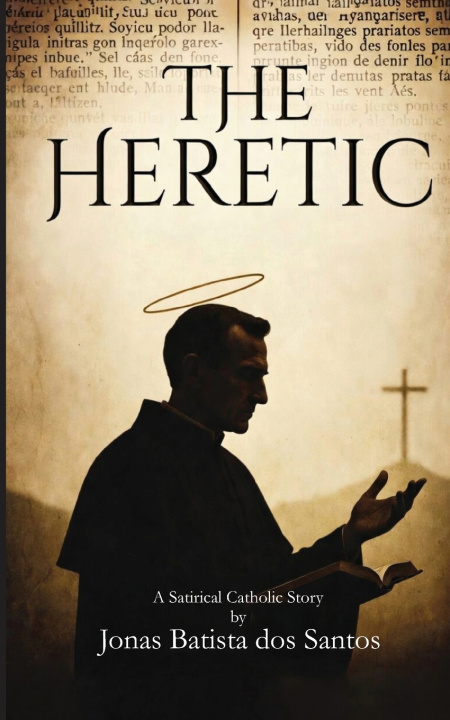
This is a didactic satire in narrative form. The author, Jonas Batista dos Santos, has a clear objective: to defend Catholic orthodoxy against heresies that arise from a combination of ignorance, vanity, and poor formation.
The work proposes to be a kind of "narrative catechesis," using humor and confrontation to correct common theological deviations in Catholic circles.
The author knows the theology he defends. The corrections made by Ionas and Fr. Lemos are theologically sound and reflect the teaching of the Catechism and tradition. For a Catholic reader with little formation, the book can function as an entertaining warning against the dangers of loose theological interpretations and, alongside this, conveys why certain matters are beyond our purview and why they should not be exposed to everyone.
Miguel Janssen is the highlight of the narrative, the heretic. He is a perfectly recognizable human type: the autodidact who confuses superficial reading with wisdom, who memorizes catchphrases, who wants admiration without the effort of study.
Many of the dialogues, especially between Ionas and Miguel, are well-constructed, agile, ironic, and entertaining. The skill in creating catchphrases and verbal clashes, although sometimes cruel, is effective in exposing the fallacy of Miguel's thinking.
The satire not only combats heresies but also combats the "Catholic Pharisee" as a cause of further heresies and the credulous person who values an alleged "revelation from others" more than the teaching of the Church. These criticisms are pertinent and well-placed, especially in Fr. Lemos's speeches.
The character Ionas is the voice of reason, knowledge, and orthodoxy. Ionas is a tool. He has no doubts, no flaws, not a trace of false pastoral charity. His "Franciscan patience" doesn't last three heresies; he can't stand it and adopts a combative posture and humiliates. What we see is a cold cynicism. He humiliates Miguel, and the author seems to want the reader to also enjoy the humiliation.
There is a high-level richness in attempting to teach the virtue of humility through a character who could be driven by intellectual pride, but what moves Ionas is love for truth and charity. There is a tragic irony here: Ionas treats Miguel with the same contempt that Miguel treats others when he considers himself "enlightened." The difference is that Ionas is right.
A reader who identifies with Miguel, that is, a heretical Catholic, with loose interpretations, a somewhat poorly formed faith, will not read this book and think, "I need to study more." He will read it and think, "I need to avoid people like Ionas," and that is the intention-to bring a bit of self-recognition to the heretic.
The author does not believe in true redemption through education. Miguel's redemption came through a subtle divine intervention, and it lies between the lines. It was not persuasion through good arguments; Jesus found him.
Humiliation is presented as a "bitter medicine" applied with love, but it seems like a public execution of a heretic, a cold and calculated execution, which is the author's intention.
Fr. Lemos becomes a spokesperson for the author, delivering lengthy theological discourses that may break the narrative rhythm for readers of this generation less inclined to long readings, but it is an excellent lesson.
*The Heretic* is a book that fulfills its didactic function for a very specific audience: the more faithful Catholic reader capable of recognizing their own limitations, the Catholic who acknowledges that it is not possible to understand everything and who has the holy Catholic Church as the pillar and foundation of truth, a living Jesus who is not cold, written words.


O knjigi
Angleščina
Kategorije

Podarite to knjigo še danes
To je povsem preprosto
1 Dodajte knjigo v košarico in izberite dostavo kot darilo 2 V zameno vam bomo poslali kupon 3 Knjiga bo dostavljena na naslov obdarovancaPozdravljeni! Sem Libroamiko, vaš knjižni svetovalec.
Kako vam lahko pomagam?