
 Kontakt
 Kako nakupovati
Dostava
Svetovalec pri nakupu
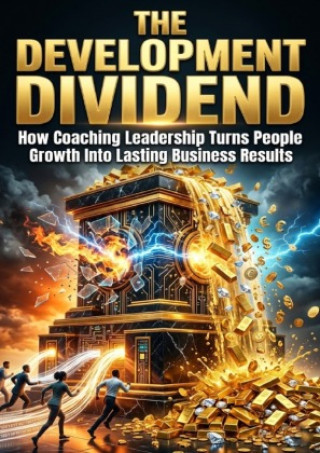
The Development Dividend
How Coaching Leadership Turns People Growth Into Lasting Business Results.DE
 Angleščina
 78 b
78 b
 Novo
Novo
30 dni za vračilo blaga

This book investigates how coaching leadership style develops people while delivering business results, examining the tension between individual growth and organizational performance. It explores whether fostering employee development can coexist with achieving strategic objectives, or whether both outcomes reinforce one another through interconnected organizational systems. Rather than treating coaching as a soft management technique, the work presents it as a leadership approach that reshapes interaction patterns, decision flows, and long term organizational capability.First, coaching strengthens psychological safety and trust by creating environments where team members can express uncertainty, ask questions, and experiment without fear of blame. This openness accelerates learning cycles, improves adaptability, and allows organizations to respond more effectively to change and complexity.Second, growth oriented conversations shift attention from short term task completion toward long term capability development. By aligning personal aspirations with organizational goals, coaching creates feedback loops that surface emerging opportunities, encourage initiative, and deepen employee engagement. Development therefore becomes not separate from performance, but part of the mechanism through which performance improves over time.Third, consistent coaching practices help build internal leadership pipelines, reducing dependence on external hiring while preserving institutional knowledge and cultural continuity. As employees gain confidence and decision making capacity, organizations become more resilient and capable of transitioning talent into new responsibilities more efficiently.Together, these mechanisms demonstrate how people development and business performance evolve as mutually reinforcing processes rather than competing priorities.


O knjigi
Angleščina
