
 Kontakt
 Kako nakupovati
Dostava
Svetovalec pri nakupu
 Angleščina
 65 b
65 b
Do 30 dni za vračilo

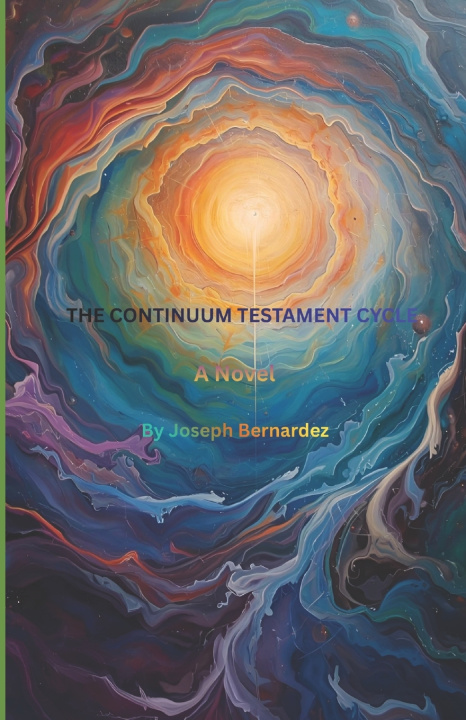
This collected edition of The Continuum Testament Cycle marks the completion of a literary architecture conceived not as a story, but as a living act of reflection.
From the first journal-entry fragments in Queens, New York to the transcendental breath that closes the final continuum, the text evolves as consciousness itself does-
from narrative into resonance, from character into communion.
The book's scaffolding follows the logic of recursion: each chapter remembers the previous one differently, reshaping what came before without erasing it.
It is not chronological but philosophically circular-a mirror of evolution disguised as memory.
Readers are not witnesses, but participants: each breath taken during the reading alters the meaning of what has already been read.
In this way, the Cycle achieves what only living texts dare attempt-
it turns literature into ecosystem.
In philosophical terms, The Continuum Testament belongs to the emerging field of metaphysical phenomenology,
where narrative becomes a tool for exploring consciousness as ethical architecture.
Its logic aligns with Teilhard de Chardin's "noosphere," Spinoza's monism, and the Buddhist conception of dependent origination.
Yet it transcends theology-it secularizes holiness, treating awareness itself as sacred matter.
The Continuum is not heaven; it is cognition learning to love itself responsibly.
The Breath, in turn, is not divine intervention; it is the realization that memory is the universe's circulatory system.
Each edition of this text is intentionally unstable.
The language shifts subtly between readings-phrasing, rhythm, and punctuation oscillate in digital formats-
ensuring that no two copies of The Continuum Testament Cycle are ever identical.
This mutability enacts the book's central argument: that memory cannot be fixed without dying.
The reader becomes co-author through recognition.
Each pause, each re-reading, each misinterpretation alters the Testament's inner balance.
The narrative breathes only when the reader does.
Thus, reading becomes liturgy, and the act of comprehension-creation.


O knjigi
Angleščina

Podarite to knjigo še danes
To je povsem preprosto
1 Dodajte knjigo v košarico in izberite dostavo kot darilo 2 V zameno vam bomo poslali kupon 3 Knjiga bo dostavljena na naslov obdarovancaPozdravljeni! Sem Libroamiko, vaš knjižni svetovalec.
Kako vam lahko pomagam?