
 Kontakt
 Kako nakupovati
Dostava
Svetovalec pri nakupu
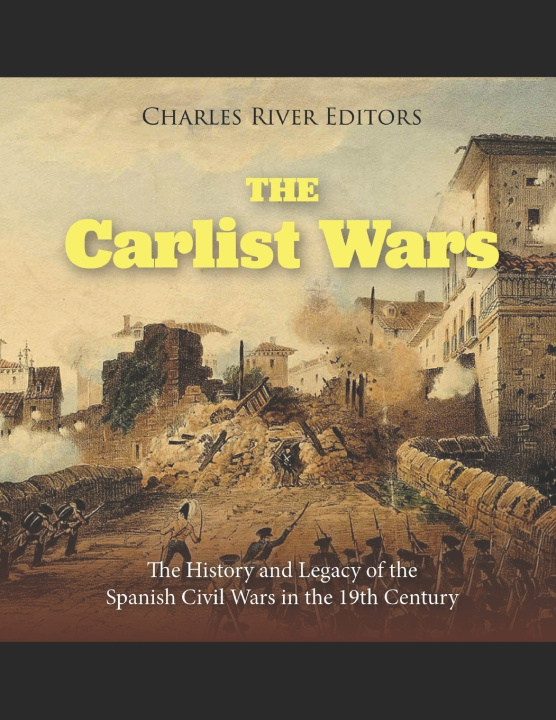
The Carlist Wars
The History and Legacy of the Spanish Civil Wars in the 19th Century
 Angleščina
 24 b
24 b
Do 30 dni za vračilo

Thinking of Spain as a modern nation state today distorts the complicated reality that the Iberian Peninsula faced in the past. Spain was a nation in progress, consisting of regions united under the Spanish crown, but with strong regional identities based on different historical and cultural experiences. The largest entities were the kingdoms of León and Castile, but Spain also included the kingdoms of Navarre, Andalusia, Granada, Jaén, Aragon, and Valencia. There were also the principalities of Asturias and Catalonia, the lordship of Vizcaya, and both Guipúzcoa and Alava were "exempted provinces." Navarre, Aragon, and Catalonia had separate Cortes, which were versions of parliaments (Parker 18-19). This complex system of entities granted privilege to local power structures over the concept of a unified nation and made administration difficult, because there were few standards that applied to all of Spain. Many of the regions had special laws that respected and allowed traditional institutions, administrative patterns, and cultural patterns. These local and regional rights were called fueros and were fiercely defended against centralization. The fueros originated as rights agreed to when the regions joined the Spanish crown. Before becoming king, the king-designate had to swear to maintain and respect the fueros. This meant that the rights of the king were to a considerable extent limited.
Inevitably, liberals and centralizing monarchs alike tried to change the situation over the years, which produced political tensions. The Carlists promised to maintain the older system, which is why they were so firmly backed in the Basque regions by most of the peasants and nobility. The Carlist claimants were strong Catholics and were strongly supported by the Church, and thus by the more fervently Catholic portions of the population. On top of that, the arrival of the Bourbon dynasty in Spain caused problems, because the French version of kingship was one of autocratic power based on divine right and France was rapidly centralizing its administration and dumping ancient rules (Parker 18-19).
Ultimately, the wars began because of dynastic matters, and in fact, the Carlist Wars in Spain are named for Carlos (1788-1855), the brother of Spanish King Ferdinand VII. Carlos was the infante, the presumed successor, since his brother Ferdinand VIII had no children through his first three marriages. He married a fourth time in 1829, this time to his cousin Maria Christina from the Kingdom of the Two Sicilies, and when Maria Christina became Queen Consort, Ferdinand hoped for children.
Ferdinand VII died in 1833 and upon his death, his daughter became Queen Isabella II, but since she was only three years old, her mother Maria Christina became regent. Regents led the government until the royal child reached the age of majority, 18-years-old. Carlos refused to accept Isabella and announced that he was King Carlos V, and he was backed by a significant portion of the Spanish public. Carlos V and his heirs regarded themselves as the rightful rulers of Spain, and the dispute roiled Spanish politics for the rest of the 19th century. Underscoring it all was the fact that there was a great deal of resentment at pushes for modernization and the powerful Catholic Church strongly resented liberal policies like seizure of Church lands and suppression of the Jesuits. The support for Carlism came largely from the Basque provinces, Navarre, the rural peasantry, large landowners, and the Church.
Maria Christina as Queen Consort was not the formal queen of Spain, but after the birth of Isabella, Ferdinand's first surviving child, she became more and more influential with her husband and with liberal elements in the country. Her supporters came to be called Cristinos, and by Ferdinand's death, most of the Spanish establishment was loyal to her.


O knjigi
Angleščina

Podarite to knjigo še danes
To je povsem preprosto
1 Dodajte knjigo v košarico in izberite dostavo kot darilo 2 V zameno vam bomo poslali kupon 3 Knjiga bo dostavljena na naslov obdarovancaPozdravljeni! Sem Libroamiko, vaš knjižni svetovalec.
Kako vam lahko pomagam?