
 Kontakt
 Kako nakupovati
Dostava
Svetovalec pri nakupu
 Angleščina
 36 b
36 b
Do 30 dni za vračilo

For centuries, authority was earned.
Through training. Through accreditation. Through institutional reputation. Through accountability.
Today, authority is increasingly generated.
Artificial intelligence systems now produce fluent explanations, legal reasoning, medical suggestions, political analysis, and strategic recommendations at scale. Their answers are structured, confident, immediate, and available at any hour. To the user, they look and feel authoritative.
But authority is not the same as accuracy.
Authority is a social function built on responsibility, legitimacy, and consequence.
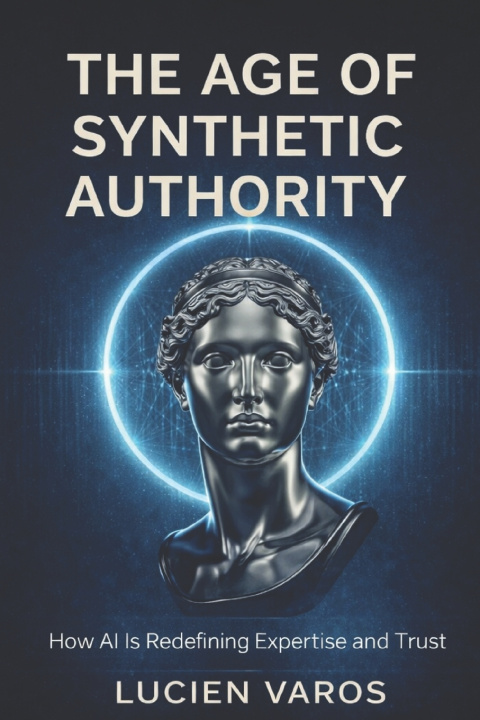
The Age of Synthetic Authority argues that we are witnessing a structural migration of trust. Expertise is no longer signaled primarily by credentials or institutions. It is signaled by interface. Fluency substitutes for training. Speed substitutes for deliberation. Confidence substitutes for accountability.
Across medicine, law, journalism, education, corporate strategy, and governance, trust is shifting from identifiable experts to probabilistic systems. Responsibility becomes diffuse. Legitimacy becomes opaque. Institutional authority becomes harder to distinguish from its simulation.
This is not a warning about misinformation. It is not a call to reject AI.
It is a clear analysis of how authority itself is being redefined.
As artificial intelligence becomes the primary mediator of knowledge, the question is no longer whether it is correct.
The question is who, if anyone, stands behind it.


O knjigi
Angleščina

Podarite to knjigo še danes
To je povsem preprosto
1 Dodajte knjigo v košarico in izberite dostavo kot darilo 2 V zameno vam bomo poslali kupon 3 Knjiga bo dostavljena na naslov obdarovancaPozdravljeni! Sem Libroamiko, vaš knjižni svetovalec.
Kako vam lahko pomagam?