
 Kontakt
 Kako nakupovati
Dostava
Svetovalec pri nakupu
 Angleščina
 34 b
34 b
Do 30 dni za vračilo

He had a name before they called him Friday. She had a life before they called her death fortunate. They had a world before it was reduced to darkness.
The greatest adventure stories of the colonial era required the silence of the people they colonised. The heroes needed the natives to be mute in order to be heroes. The plots needed indigenous lives to be furniture in order for European lives to be protagonists.
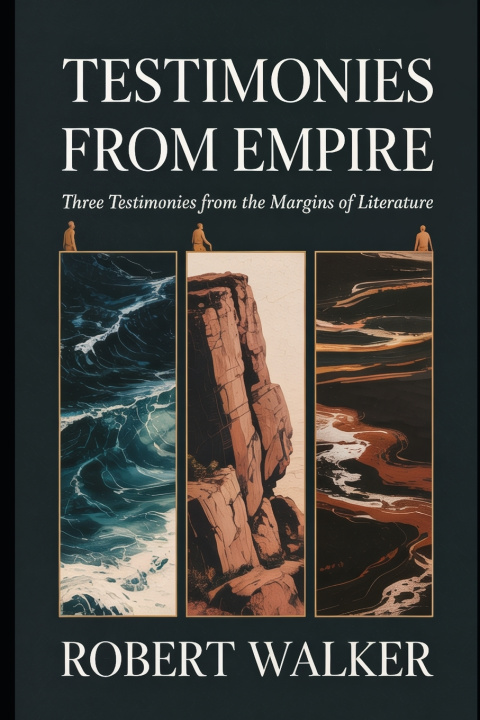
Testimonies from Empire breaks that silence with three companion novellas that run alongside the most famous colonial adventure novels in the English language.
WHAT THE SAVED MAN KNEW - A Companion Novella to Daniel Defoe's Robinson Crusoe
A Kali'na navigator named Tuenka - the man Crusoe will call Friday - had twenty-six years of life, three languages, and the ability to read water like scripture before a stranger pulled him from the surf, pointed a weapon at him, and gave him a new name. This is his testimony: the man before the name, the navigator inside the servant, the consciousness that Crusoe's story required to be absent.
WHAT THE MOUNTAIN KEEPS - A Companion Novella to H. Rider Haggard's King Solomon's Mines
Allan Quatermain called Foulata's death "fortunate" - fortunate because a living woman who loved a white man would have created "complications." The king who sealed his borders was given a noble farewell speech and then forgotten. This novella tells the story Quatermain's account erased: Foulata's political intelligence, her grandmother's knowledge of healing, and the king's calculated decision to close the mountain - not from noble simplicity, but from the hard-won knowledge of what white men cost.
WORK, WITNESS, THE GAP - A Companion Novella to Joseph Conrad's Heart of Darkness
Conrad wrote one of the greatest sentences in the English language about a helmsman dying at the wheel - and in that sentence the helmsman had no name. The woman on the bank stretched her arms over a grief that was not metaphorical. The communities along the Congo built the stations, steered the boats, and carried the ivory that made Kurtz possible. Their testimony fills the gap between Conrad's "the horror" and the specific, particular, human horror of what was actually done.
These novellas do not rewrite the originals or presume to improve upon them. Every rescue, every death, every departure occurs exactly as recorded. What changes is who is telling the story - and the discovery that the silence was never empty.
The progression moves from the intimate to the systemic: from a single man renamed on a single island, to a woman and a king erased by a single expedition, to an entire civilisation reduced to scenery by an empire's machinery of extraction.
Empire told itself stories, and the stories were powerful, and the silence they required was vast. This book is a small sound in that vast silence.
Volume 4 in the Testimonies from the Margins of Literature series. Each volume stands alone.
Reading the original novels is not required - but after these testimonies, you may never read them the same way again.


O knjigi
Angleščina

Podarite to knjigo še danes
To je povsem preprosto
1 Dodajte knjigo v košarico in izberite dostavo kot darilo 2 V zameno vam bomo poslali kupon 3 Knjiga bo dostavljena na naslov obdarovancaPozdravljeni! Sem Libroamiko, vaš knjižni svetovalec.
Kako vam lahko pomagam?