
 Kontakt
 Kako nakupovati
Dostava
Svetovalec pri nakupu
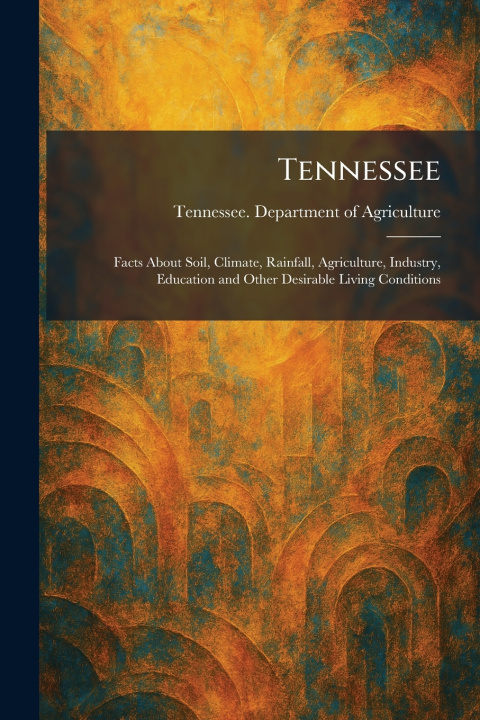
Tennessee
Facts About Soil, Climate, Rainfall, Agriculture, Industry, Education and Other Desirable Living Conditions
 Angleščina
 34 b
34 b
Do 30 dni za vračilo

"Tennessee; Facts About Soil, Climate, Rainfall, Agriculture, Industry, Education and Other Desirable Living Conditions" is a comprehensive survey of the Volunteer State during the early 20th century. Originally compiled by the Tennessee Department of Agriculture, this informative work provides a detailed look at the geographical and economic landscape of the state, serving as both a promotional guide for prospective residents and a statistical record for students of history and industry.
The text offers an in-depth exploration of Tennessee's diverse natural resources, including detailed analysis of soil compositions and climatic patterns that supported its robust agricultural sector. Beyond farming, the work covers the burgeoning industrial opportunities of the 1920s, the state of the public education system, and the general quality of life across different counties. By capturing the essence of Tennessee through precise data and descriptive accounts, the book serves as a vital historical primary source regarding the state's infrastructure, natural wealth, and social development. It remains a valuable resource for those interested in the socio-economic evolution of the American South and the history of regional planning.
This work has been selected by scholars as being culturally important, and is part of the knowledge base of civilization as we know it. This work was reproduced from the original artifact, and remains as true to the original work as possible. Therefore, you may see the original copyright references, library stamps (as most of these works have been housed in our most important libraries around the world), and other notations in the work.
This work is in the public domain in the United States of America, and possibly other nations. Within the United States, you may freely copy and distribute this work, as no entity (individual or corporate) has a copyright on the body of the work.
As a reproduction of a historical artifact, this work may contain missing or blurred pages, poor pictures, errant marks, etc. Scholars believe, and we concur, that this work is important enough to be preserved, reproduced, and made generally available to the public. We appreciate your support of the preservation process, and thank you for being an important part of keeping this knowledge alive and relevant.


O knjigi
Angleščina
