
 Kontakt
 Kako nakupovati
Dostava
Svetovalec pri nakupu
 Angleščina
 252 b
252 b
Do 30 dni za vračilo

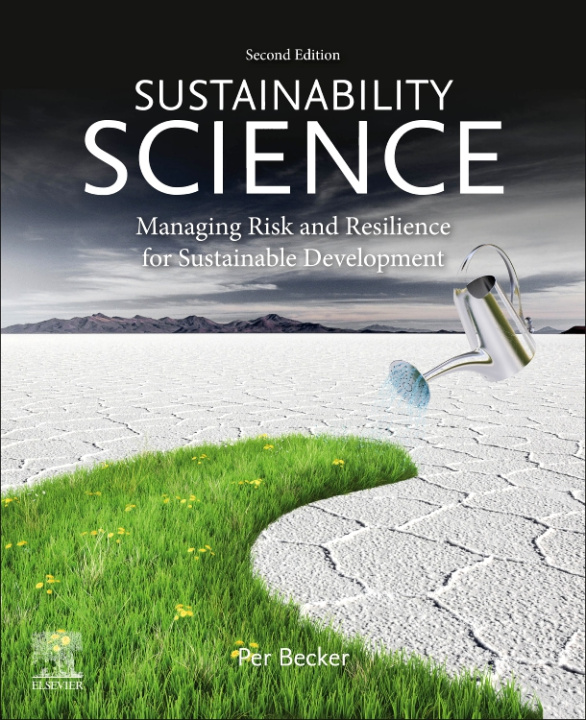
Sustainability and sustainable development are increasingly important guiding principles across functional sectors and scientific disciplines. Policymakers, practitioners and academics continue to wrestle with the complexity of risk, resilience and sustainability, but because of the necessary transdisciplinary focus, it is difficult to find authoritative content in a single source. Sustainability Science: Managing Risk and Resilience for Sustainable Development, Second Edition continues to fill this gap for researchers and advanced studies in sustainability science. The second edition maintains the same structure as the first edition. The first part focuses on describing the state of the world; how society and its sustainability challenges have coevolved over time, our main contemporary sustainability challenges, the range of disturbances, disruptions and disasters that are symptoms of the unsustainable state we are in, and the processes of change continuously transforming them. The second part of the book turns the reader’s ttention to how to approach the world; suggesting a language for grasping and connecting concepts of risk, resilience and sustainable development, providing an operationalization of resilience, facilitating an appreciation of the fundamental importance of complexity, and introducing different systems perspectives and approaches for coping with the complexity of both context and issues. The third part of the book is devoted to changing the world towards safety and sustainability; elaborating on the roles of traditional science (descriptive) and design science (normative) in such change, on knowledge resistance and barriers for change, on capacity development as a purposeful process to increase resilience, and on the social change required for the sustainability of humankind. Sustainability Science, Second Edition is uniquely positioned at the intersection of risk, resilience, sustainability and development – areas that are quickly evolving and have been opened to myriad debates across disciplines. This book will continue to be a valuable reference for nuance on these debates for geoscientists, engineers and environmental scientists responsible for, as well as in private companies or international organizations involved in, hazard and disaster management, risk management, societal planning, and climate change adaptation. Includes new sections on the processes of change that continuously reshape sustainability science: complexity, knowledge resistance, and the challenges of ambiguity Introduces a new global agenda for sustainable development that reflects recent thinking in sustainability Presents a wide range of global case studies that help readers bridge the gap between the theoretical and practical


O knjigi
Angleščina

Podarite to knjigo še danes
To je povsem preprosto
1 Dodajte knjigo v košarico in izberite dostavo kot darilo 2 V zameno vam bomo poslali kupon 3 Knjiga bo dostavljena na naslov obdarovancaPozdravljeni! Sem Libroamiko, vaš knjižni svetovalec.
Kako vam lahko pomagam?