
 Kontakt
 Kako nakupovati
Dostava
Svetovalec pri nakupu
Slowly, There Is Time
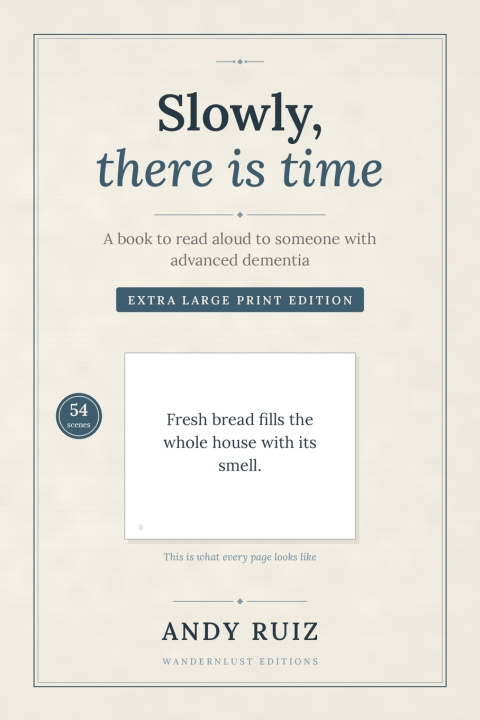
A book to read aloud to a person with advanced dementia, with just one sentence on each page, in very large print
 Angleščina
 24 b
24 b
 Novo
Novo
Do 30 dni za vračilo

+++ Used by more than 50,000 families +++
There comes a time when conversation is no longer possible. Questions become tiring, long sentences get lost along the way, and the caregiver may no longer know what to do with the hours spent together.
Slowly, There Is Time is a book to read aloud when illness is well advanced. There are no questions to get wrong, no dates to remember, and no names to recall. Nothing is demanded. Only simple things happening now: fresh bread, rain on the roof, a cat in the sun, clean sheets.
What the book is like:
- One sentence on each page, in very large print with generous white space
- 54 everyday scenes arranged in six parts
- Everything is written in the present tense: the listener is never asked to remember
- Short, concrete, sensory sentences about smell, touch, temperature, sound, and light
- Open the book anywhere, read for as long as feels right, and close it without needing to finish
- The same chapter can be read again and again: repetition is part of the experience
The six parts explore simple, familiar experiences:
- The house: the kitchen, table, bed, clean sheets, window, fire, door, chair, courtyard
- The street and countryside: morning, sun, rain, wind, paths, rivers, sea, snow, lamplight
- Things to eat: bread, coffee, soup, ripe fruit, oranges, chocolate, stew, cake
- Animals and plants: cats, dogs, birds, hens, horses, flowers, trees, gardens, bees
- Hands and body: water and soap, clean clothes, shoes, blankets, sun on the face, rest
- Sounds and music: bells, rain on the roof, clocks, radio, laughter, dance music, singing
A short practical section for the person reading aloud explains:
- How to prepare the moment: light, quiet, glasses, hearing aids, and comfortable seating
- What to do if the person becomes restless, cries, asks for someone who is absent, or does not respond
- Why repeating is not a mistake and why silence after each sentence is part of the reading
- How simple sensory objects can be used safely alongside the book
Written for:
- Sons and daughters caring for someone at home who have run out of things to say
- Care homes, day centres, memory units, and home-care services
- Occupational therapists and care staff seeking sensory material written for adults, not adapted from children's activities
- Relatives who want to be close without turning a visit into a test of memory
Written in plain international English, without local idiom.
Important notice: this book is not a treatment, therapy, or diagnostic tool, and it does not replace a health professional. Reading aloud may soothe and help people feel closer, but it does not cure or halt any illness.
No remembering is required. No answer is required. Sometimes a familiar voice, a simple sentence, and time together are enough.


O knjigi
Angleščina
