
 Kontakt
 Kako nakupovati
Dostava
Svetovalec pri nakupu
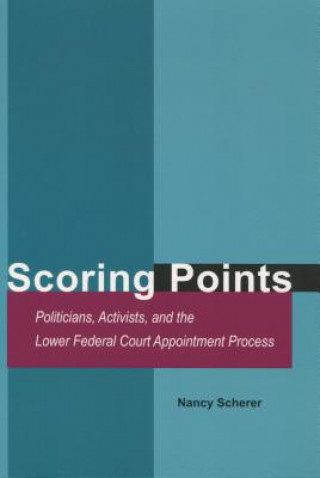
Scoring Points
Politicians, Activists, and the Lower Federal Court Appointment Process
 Angleščina
 66 b
66 b
30 dni za vračilo blaga

This book explores how the lower federal court appointment process became vastly politicized in the modernera. Scherer develops a theory of "elite mobilization," positing that lower court appointments have always been used by politicians for electoral purposes, but because of two historic changes to American institutions in the 1950s and 1960s - the breakdown of the old party system, and a federal judiciary reception to expanding individuals' constitutional rights - politicians shifted from an appointment system dominated by patronage to a system with new policy-oriented appointment strategies. The use of these new strategies not only resulted in partisan warfare during the nomination and confirmation stages of the appointment process, but also led to party-polarized voting in the lower federal courts. Employing exclusive data of judicial decision-making from the New Deal era through the present, Scherer demonstrates that there was little party-polarized voting in the lower federal courts until the late 1960s, and that once politicians began to use elite mobilization strategies, significant party-polarized voting in the lower federal courts resulted. Accordingly, elite mobilization strategies have affected not only politics in Washington, but also the way justice is distributed across the country.


O knjigi
Angleščina

Podarite to knjigo še danes
To je povsem preprosto
1 Dodajte knjigo v košarico in izberite dostavo kot darilo 2 V zameno vam bomo poslali kupon 3 Knjiga bo dostavljena na naslov obdarovancaPozdravljeni! Sem Libroamiko, vaš knjižni svetovalec.
Kako vam lahko pomagam?