
 Kontakt
 Kako nakupovati
Dostava
Svetovalec pri nakupu
 Angleščina
 34 b
34 b
30 dni za vračilo blaga

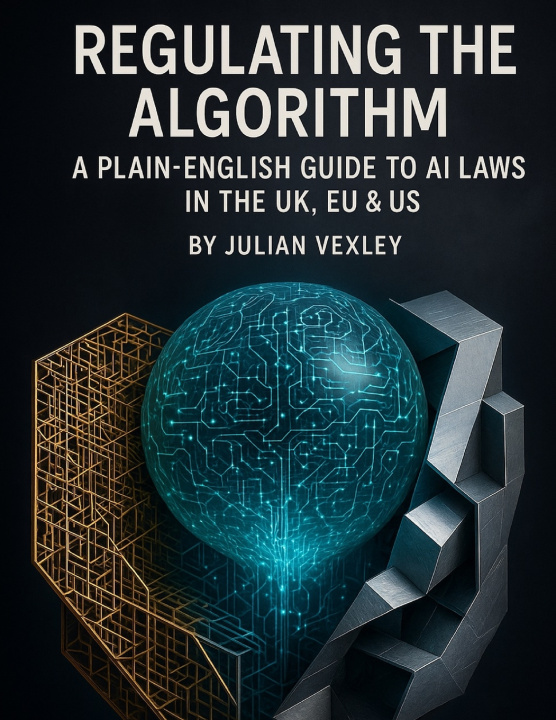
Regulating the Algorithm is a clear, practical guide to the fast-moving world of AI laws in the UK, EU, and United States. Written in plain language for business leaders, policy teams, lawyers, technologists, founders, and anyone who needs to turn principles into practice, it cuts through hype and legal jargon to explain what the new rules actually mean, why they were created, and how to comply without slowing innovation. Julian Vexley shows how three competing models are reshaping the global landscape: Europe's risk-based AI Act, the United Kingdom's pro-innovation, regulator-led approach, and the United States' patchwork of executive orders, federal agency guidance, and ambitious state laws. You will learn how these frameworks define high-risk systems, mandate transparency, demand human oversight, govern data and model documentation, and draw hard lines around unacceptable uses. Just as important, you will see where the regimes overlap, where they diverge, and where the grey areas hide.
The book begins with why regulation is needed now, grounding the debate in real impacts: bias and discrimination, safety and reliability, deepfakes and misinformation, privacy and surveillance, IP and model training, security and export controls, liability and accountability. From there, Vexley maps each jurisdiction in turn. The EU chapters explain obligations across the AI lifecycle, conformity assessment, post-market monitoring, incident reporting, and penalties. The UK chapters translate high-level principles into the day-to-day expectations of sector regulators and show how "responsible innovation" works in practice. The US chapters decode federal directives and agency playbooks while making sense of state-level rules on biometrics, automated decision systems, privacy, and transparency.
Throughout, the emphasis is practical. You will find a coherent approach to governance that any organisation can adopt: inventory your AI systems, classify risk, document data and models, test for bias and safety, put humans in the loop where it matters, monitor performance after deployment, and create clear routes for challenge and redress. The book explains how to build cross-functional teams, align product roadmaps with legal obligations, and integrate security, privacy, and ethics into every stage of development. It also shows how to communicate risk and benefit to boards, customers, and the public in a way that earns trust.
Regulating the Algorithm does more than summarise statutes; it compares philosophies. Europe leads with rights and precaution. The UK backs agile supervision and industry guidance. The US leans on markets, competition, and targeted guardrails. Understanding these differences is essential for anyone launching products globally, negotiating vendor contracts, or planning compliance budgets. The final chapters look ahead to frontier models, foundation model duties, safety evaluations, watermarking and provenance, open-source questions, international cooperation, and the geopolitics of standards. The message is steady and pragmatic: good governance is not red tape; it is the operating system for trustworthy AI.
If you need one book that explains the rules, shows how they fit together, and helps you act with confidence, this is it. Clear, concise, and grounded in real-world practice, Regulating the Algorithm is your field guide to building and deploying AI that is lawful, safe, and worthy of public trust.


O knjigi
Angleščina
