
 Kontakt
 Kako nakupovati
Dostava
Svetovalec pri nakupu
 Angleščina
 65 b
65 b
 Novo
Novo
30 dni za vračilo blaga

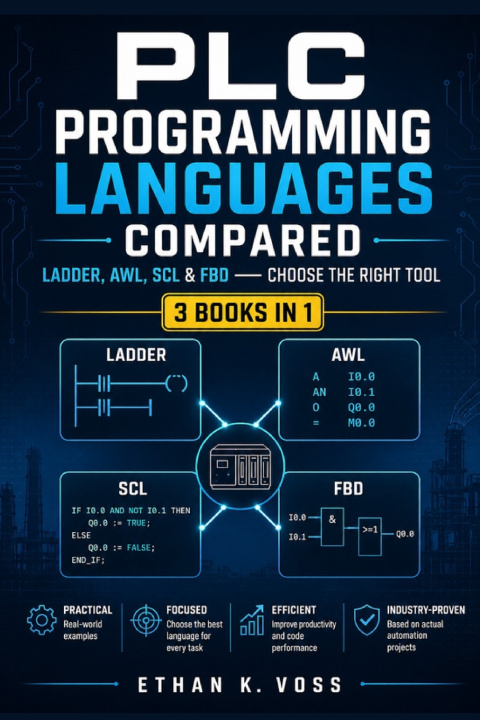
Are you ready to take your automation skills to the next level? "PLC Programming Languages Compared" is the ultimate 3-in-1 collection designed specifically for programmers deciding between plc languages. This comprehensive bundle brings together three carefully selected expert guides into a single, powerful resource that covers everything you need to know.
In Part 1, you will dive into "Differences and advantages between S7" - a thorough exploration of the fundamental concepts and practical techniques. Part 2 takes you deeper with "Advanced PLC Programming", providing advanced strategies and real-world solutions. Finally, Part 3 completes your education with "Advanced PLC Programming", giving you the expert-level knowledge that separates professionals from amateurs.
Whether you are working in the field, at your engineering desk, or planning your next automation project, this 3-in-1 bundle provides immediate, actionable knowledge. Stop buying books one at a time - get the complete toolkit in a single purchase and save.
WHAT'S INSIDE - 3 COMPLETE BOOKS
PART 1: Differences and advantages between S7
A complete standalone guide covering differences and advantages between s7. Packed with practical examples, step-by-step instructions, and expert insights drawn from real industrial projects.
PART 2: Advanced PLC Programming
A complete standalone guide covering advanced plc programming. Packed with practical examples, step-by-step instructions, and expert insights drawn from real industrial projects.
PART 3: Advanced PLC Programming
A complete standalone guide covering advanced plc programming. Packed with practical examples, step-by-step instructions, and expert insights drawn from real industrial projects.
WHO THIS BOOK IS FOR
- Programmers deciding between PLC languages
- Automation engineers looking to expand their skill set
- Maintenance technicians who want to go beyond basic troubleshooting
- Engineering students preparing for a career in industrial automation
- Technical managers who need to understand the systems they oversee


O knjigi
Angleščina
