
 Kontakt
 Kako nakupovati
Dostava
Svetovalec pri nakupu
Plato
 Angleščina
 30 b
30 b
30 dni za vračilo blaga

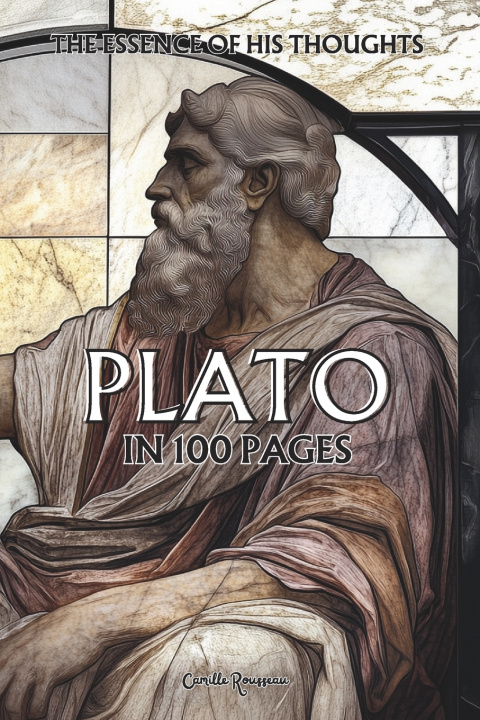
Where others were content to describe the world, Plato sought to rethink it through the lens of universal principles, aiming to make it more harmonious. For him, philosophy was not mere speculation but a path to grasping the essence of things and guiding human action toward the Good.
Plato's work combines intellectual rigor with ethical depth. Through his dialogues, he explores themes as varied as justice, love, education, and the nature of reality, while offering a method to analyze the world and strive to improve it. His vision of justice as harmony and his pursuit of the Beautiful and the Good transcend eras, continuing to shed light on contemporary challenges.
But take note: Plato was no dogmatist. His dialogues, whether The Republic, The Symposium, or Timaeus, reveal a thinker deeply concerned with the limits of human knowledge, ready to question and revise his ideas in the face of debate and reflection. In this, he remains a demanding and dynamic interlocutor, inviting us to think for ourselves.
Plato did not present abstractions detached from human realities but a philosophy rooted in the great questions of his time, such as social justice, governance, and education. Through his works, he pushes us to look beyond appearances and uncover the universal principles that structure our existence. This book shows you how to use Platonic ideas to analyze, reflect, and act in the face of today's challenges.
What you'll find in this book
The quest for truth: an intellectual compass
Explore Plato's dialectical method, which invites us to question assumptions to approach truth. Learn why this pursuit remains crucial in an era overwhelmed by misinformation and relativism.
Justice: inner and collective harmony
Discover Plato's vision of justice as balance within the soul and society. This chapter examines how his ideas can inspire solutions to modern issues such as inequality and political polarization.
Education: shaping the soul and enlightening society
Plato saw education as the key to a just and stable society. This chapter delves into his views on teaching and their relevance in a world where access to education is vital to reducing inequality.
Love and beauty: a path to the Good
In The Symposium and Phaedrus, Plato develops a vision of love and beauty as forces capable of elevating the soul. This chapter explores how these concepts can enrich our understanding of art, aesthetics, and human relationships.
Rethinking change: a philosophy for action
Plato didn't merely dream of an ideal world; he proposed principles to transform it. This chapter examines how his thought can inspire action in response to ecological, social, or political crises.
This book is for you if...
- You want to better understand Plato's philosophy and its influence on society and thought.
- You're eager to explore Platonic concepts through a clear and accessible guide, free of unnecessary jargon.
- You're curious about how ideas formulated over 2,000 years ago can illuminate current issues, from artificial intelligence to social justice.
Plato invites us to question, analyze, and act wisely. His philosophy, far from being mere theory, is a living tool to better understand our world and find enduring guidance. This book will lead you on a fascinating journey of exploration.


O knjigi
Angleščina
Kategorije

Podarite to knjigo še danes
To je povsem preprosto
1 Dodajte knjigo v košarico in izberite dostavo kot darilo 2 V zameno vam bomo poslali kupon 3 Knjiga bo dostavljena na naslov obdarovancaPozdravljeni! Sem Libroamiko, vaš knjižni svetovalec.
Kako vam lahko pomagam?