
 Kontakt
 Kako nakupovati
Dostava
Svetovalec pri nakupu
 Angleščina
 47 b
47 b
 Novo
Novo
30 dni za vračilo blaga

What if the automation you built to save your developers is actually the reason they are burning out?
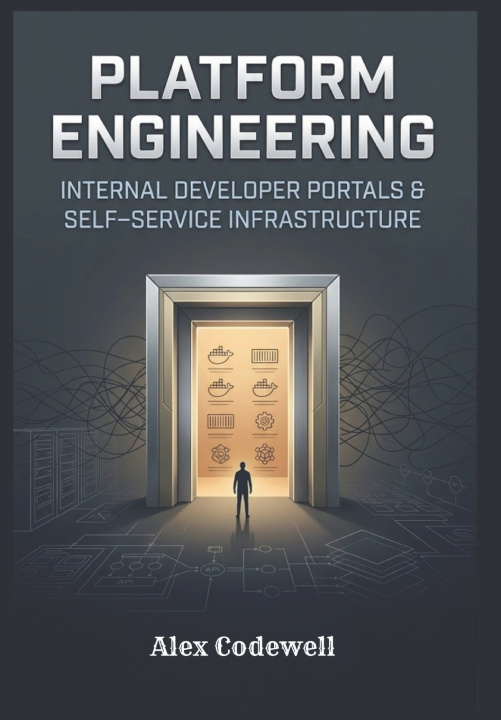
Platform engineering was supposed to fix DevOps. Instead, many organizations replaced operations silos with cognitive overload, ticket queues, and YAML fatigue. This book examines why your internal tooling exists, why your developers avoid it, and how to rebuild it as a product they actually want to use. Drawing on real organizational audits and systems design principles, it exposes the maturity trap that turned "you build it, you run it" into a burnout engine-and maps a precise way out that treats developer experience as a hard systems constraint, not a marketing slogan. You will learn why the bottleneck shifted from hardware scarcity to attention scarcity, and why every new abstraction added another leak in the cognitive dam.
Inside, you will find:
• Why operational responsibility without operational capability fragments expertise and breeds shadow IT across teams
• The hidden cost of context switching: how a 4.7-hour weekly ticket tax silently destroys lead times and architectural quality
• Why Kubernetes, service mesh, and policy-as-code created an accretion layer of complexity that senior engineers now navigate instead of shipping features
• How to treat your internal platform as a product, with user research, guardrails, and self-service paths that make the right choice obvious
• The architectural contracts, APIs, and cognitive guardrails that reduce mental load without surrendering governance, compliance, or security
If you are an engineering leader watching deployment frequency drop while incident retrospectives multiply, this book offers the architectural framework to rebuild your delivery pipeline around attention scarcity, not hardware scarcity. Stop manualizing interactions with your own automation. Start building internal platforms that respect the limits of working memory-and watch your teams ship faster, safer, and with less friction. Your platform team is not a help desk. It is a product team. Time to build like one.


O knjigi
Angleščina
