
 Kontakt
 Kako nakupovati
Dostava
Svetovalec pri nakupu
 Angleščina
 69 b
69 b
 Kmalu
Kmalu
 Novo
Novo
 Datum neznan
Do 30 dni za vračilo

When a project team substitutes one flooring material for another, the savings are visible immediately. The effects on the installer, the people who will occupy the building, and the custodian who will maintain it may unfold over years and be recorded, if they are recorded at all, in entirely different places. The decision remains a success on paper even when some of its costs have simply been transferred to people with less power to refuse them.
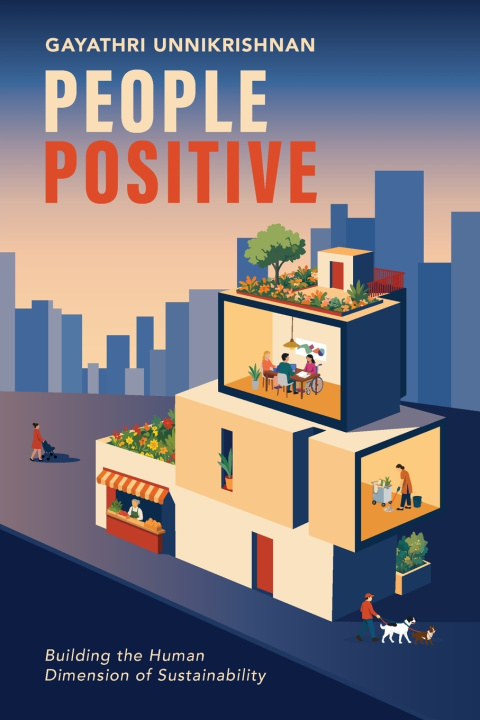
People Positive investigates why the human consequences of buildings, products, and supply chains are so difficult to see before decisions are made. Environmental impact has become part of the language of design, procurement, investment, and corporate strategy. Human impact is still divided among departments, buried in contracts, or reduced to claims that are difficult to examine and harder to prove.
Gayathri Unnikrishnan came to this subject through a career spanning engineering, manufacturing, design, public health, sustainability standards, and social impact. Her work has taken her into factories, hospitals, offices, classrooms, construction sites, and the meeting rooms where evidence competes with cost, convention, and time. At the International WELL Building Institute, she led the development of WELL v2, part of a standard now applied across more than 4.6 billion square feet in over 125 countries. She later founded Liveable to help organizations understand and communicate their effects on people with greater rigor.
The book draws together histories and contemporary cases that are seldom placed in conversation, from Florence Nightingale's mortality diagrams and the Pullman company town to Carillion's collapse, the Atlanta BeltLine, and the engineered-stone silicosis crisis. Through them, Unnikrishnan examines how institutions decide whose experience counts, how responsibility becomes dispersed, and why consequences that were predictable can still appear unexpected.
The frameworks in People Positive help readers trace who is affected across a project or supply chain and bring that knowledge into the documents that govern real work. The book concludes with practical decision checks, meeting prompts, and tools for use in design, procurement, operations, investment, and sustainability strategy.
Written for real estate developers, designers, manufacturers, procurement teams, sustainability leaders, and others whose decisions shape conditions for people they may never meet, People Positive offers a more complete way to understand value and the responsibility that comes with creating it.


O knjigi
Angleščina

Podarite to knjigo še danes
To je povsem preprosto
1 Dodajte knjigo v košarico in izberite dostavo kot darilo 2 V zameno vam bomo poslali kupon 3 Knjiga bo dostavljena na naslov obdarovancaPozdravljeni! Sem Libroamiko, vaš knjižni svetovalec.
Kako vam lahko pomagam?