
 Kontakt
 Kako nakupovati
Dostava
Svetovalec pri nakupu
 Angleščina
 56 b
56 b
 Kmalu
Kmalu
 Novo
Novo
Do 30 dni za vračilo

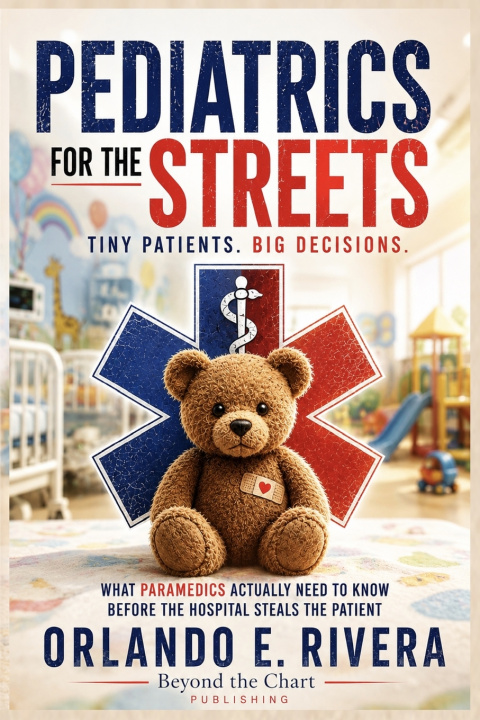
Tiny patients. Big decisions. And almost no room for hesitation.
Most paramedics can walk into the chaos of an adult emergency and trust what they know. Then the patient is six months old.
Everything changes.
The anatomy is different. The vital signs are different. The clues can be subtle. Parents are watching every move. And suddenly even an experienced provider can hear that uncomfortable question in the back of their head:
Is this kid actually sick, or am I missing something?
Pediatrics for the Streets: Tiny Patients. Big Decisions. was written for that moment.
This is not another pediatric textbook asking you to memorize more information. It is a book about judgment. About learning to see the child in front of you, recognize what matters, challenge the assumptions that can get you into trouble, and make better decisions when the pediatric call in front of you looks nothing like the scenario from class.
Through real-world thinking and street-level perspective, Pediatrics for the Streets explores the pediatric emergencies that make even experienced providers uncomfortable, including respiratory distress, croup and stridor, altered mental status, seizures, trauma, shock, fever, infants, adolescents, children with special healthcare needs, medication thinking, transport decisions, difficult family dynamics, reassessment, and the subtle presentations that are easy to underestimate.
But the real subject of this book is bigger than any diagnosis.
It is the space between what you know and what you do when the call gets real.
Written for paramedics, EMTs, EMS students, prehospital clinicians, emergency nurses, and anyone who may have to recognize a sick child before the hospital takes over, this book challenges the shortcuts, assumptions, and false reassurance that can quietly shape pediatric care.
You will not finish this book knowing everything about pediatrics.
You will finish it thinking differently when a child is looking back at you.
Because pediatric calls are not intimidating simply because the patients are small.
The patients are tiny. The decisions aren't.


O knjigi
Angleščina
