
 Kontakt
 Kako nakupovati

Dostava
Svetovalec pri nakupu
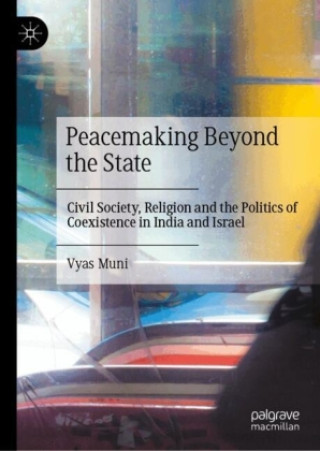
Peacemaking Beyond the State
Civil Society, Religion and the Politics of Coexistence in India and Israel.DE
 Angleščina
 373 b
 Kmalu
 Novo
 Izdaje 20. 04. 2027
Do 30 dni za vračilo

This book is written for scholars, graduate students, and researchers working in peace and conflict studies, comparative politics, political theory, South Asian studies, and Middle East studies. It is particularly suited for advanced university courses on peacebuilding, religion and politics, and citizenship in divided societies. The book examines how civil society actors-faith-based groups, grassroots initiatives, and human rights organizations-engage with religious conflict in India and Israel. It centers on three main ideas: the shortcomings of liberal, state-centered peace models; the politics of citizenship and belonging; and the significance of disputed sacred sites like Ayodhya, Gyanvapi, Al-Aqsa, and Hebron. These issues are important because in both India and Israel religion is not confined to the private sphere; it shapes national identity, legal frameworks, and everyday political life. The book addresses a central problem in peace studies: dominant liberal peace frameworks prioritize institutions, elections, and legal reforms while treating religion as secondary or destabilizing. This approach often fails to grasp how deeply religious identity is embedded in state formation and citizenship regimes. By examining civil society as a politically contested space-shaped by state regulation, shrinking civic freedoms, and ideological struggles-the book offers a more realistic understanding of how peace initiatives operate in religiously divided democracies


O knjigi
Angleščina

Podarite to knjigo še danes
To je povsem preprosto
1 Dodajte knjigo v košarico in izberite dostavo kot darilo 2 V zameno vam bomo poslali kupon 3 Knjiga bo dostavljena na naslov obdarovancaPozdravljeni! Sem Libroamiko, vaš knjižni svetovalec.
Kako vam lahko pomagam?