
 Kontakt
 Kako nakupovati
Dostava
Svetovalec pri nakupu
Pangea Proxima
 Angleščina
 51 b
51 b
 Kmalu
Kmalu
 Novo
Novo
 Izdaje 10. 08. 2026
Do 30 dni za vračilo

The continents look permanent only because human lives are too short to watch them move.
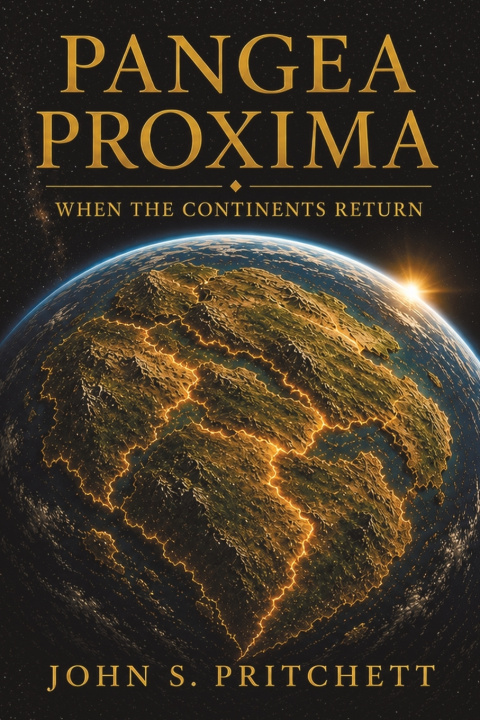
Pangea Proxima: When the Continents Return explores one of the most extraordinary possibilities in Earth's deep future: the gradual assembly of a new supercontinent hundreds of millions of years from now.
The world we know is not finished. The Atlantic Ocean is still widening. The Pacific is being consumed along many of its margins. Africa is moving toward Europe. Australia is pressing northward into Asia. Beneath every familiar coastline, tectonic forces continue to open oceans, close seas, build mountains, and rearrange the surface of the planet.
John S. Pritchett uses the proposed future supercontinent Pangea Proxima as a guide to understanding this immense geological pattern. The book moves from the ancient supercontinents Columbia, Rodinia, and Pangea into a scientifically grounded examination of what may happen when Earth's continents gather again.
Pangea Proxima is not presented as a guaranteed map of the future. It is a plausible scenario-and a powerful way to understand that the forces which shaped the ancient Earth are still active today.
The book explains how a future supercontinent could emerge through the slow closure of oceans, the expansion of subduction zones, and a series of continental collisions. Coastlines could become mountain belts. Marine sediments could be lifted high above sea level. The Atlantic, born when Pangea broke apart, might eventually become the seam through which another world is joined.
But the formation of one enormous landmass would change far more than geography.
As coastlines disappear and continental interiors expand, much of the land could become increasingly distant from the moderating influence of the sea. Moisture would have farther to travel. Mountain ranges could block rainfall. Dry soils would absorb more heat. Rivers, lakes, and habitable ecosystems might become concentrated along coasts, highlands, and narrow corridors of water.
A world united on the map could become deeply divided by climate.
The book examines:
- The tectonic forces that create and destroy oceans
- How Columbia, Rodinia, and Pangea shaped later worlds
- Why the Atlantic may not remain open forever
- How continental collisions build mountains and concentrate minerals
- Why supercontinents create fewer coastlines and larger interiors
- The effects of heat, dryness, volcanism, and changing carbon cycles
- How ocean circulation and marine ecosystems could be transformed
- Where life might survive under future environmental pressure
- Competing future scenarios, including Amasia, Aurica, and Novopangaea
- Why geological prediction must remain cautious across immense spans of time
Accessible, wide-ranging, and richly illustrated, Pangea Proxima brings together plate tectonics, climate science, oceanography, geology, and the long history of life to reveal Earth as an active system rather than a finished landscape.
It is not simply a book about where the continents may go. It is about what happens when land, ocean, atmosphere, rock, heat, carbon, and life are forced into entirely new relationships.
The next world will not appear all at once. It is already beginning-in motions too slow to feel, but powerful enough to remake the planet.


O knjigi
Angleščina

Podarite to knjigo še danes
To je povsem preprosto
1 Dodajte knjigo v košarico in izberite dostavo kot darilo 2 V zameno vam bomo poslali kupon 3 Knjiga bo dostavljena na naslov obdarovancaPozdravljeni! Sem Libroamiko, vaš knjižni svetovalec.
Kako vam lahko pomagam?