
 Kontakt
 Kako nakupovati
Dostava
Svetovalec pri nakupu
 Angleščina
 75 b
75 b
 Novo
Novo
Do 30 dni za vračilo

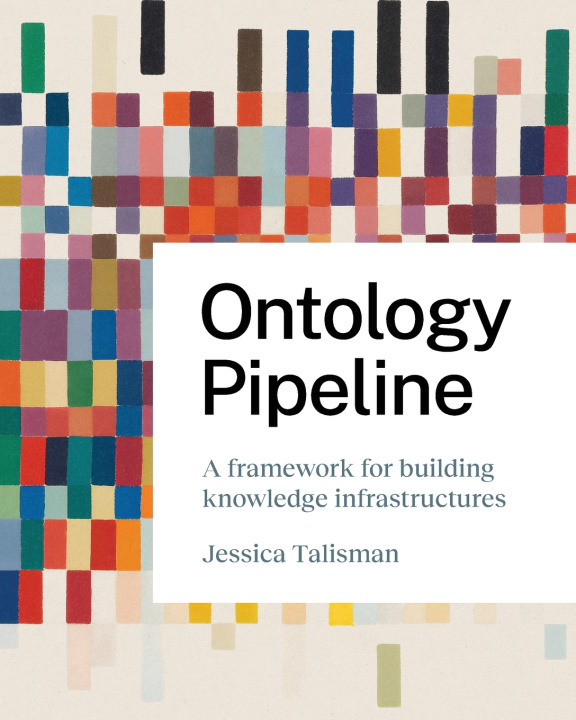
Build semantic knowledge systems with trusted and AI-ready taxonomies, ontologies, and knowledge graphs.
Ontology Pipeline gives data leaders, semantic engineers, ontologists, taxonomists, knowledge managers, librarians, AI architects, and enterprise data teams a practical framework for turning messy organizational language into structured, machine-readable knowledge. Instead of treating ontology development or knowledge graph construction as a black box, this book provides a clear sequence: controlled vocabularies, metadata schemas, taxonomies, thesauri, ontologies, and knowledge graphs.
Analyze how language, definitions, labels, synonyms, metadata, and relationships shape the performance of artificial intelligence systems. The book explains why large language models, retrieval-augmented generation, semantic search, entity resolution, and information retrieval all depend on clean, governed, semantically enriched data. It also shows how library and information science methods can help organizations build scalable semantic knowledge management systems that support both human understanding and machine reasoning.
Design each stage of the Ontology Pipeline with practical guidance, examples, standards, and implementation patterns. Readers will explore controlled vocabulary development, SKOS taxonomies, thesaurus relationships, RDF, OWL, SHACL, SPARQL, competency questions, ontology governance, semantic validation, and knowledge graph architecture. The book connects these concepts to real enterprise needs, including data quality, semantic layers, AI governance, domain modeling, knowledge management, and production AI infrastructure.
Evaluate what it really takes to build and maintain a knowledge graph as architecture, not just as a product or database. Learn why we build, govern, and maintain a knowledge graph with attention to semantic debt, staffing, operational funding, ontology change management, validation workflows, and long-term trust. For teams investing in AI, data governance, data catalogs, metadata management, enterprise architecture, or semantic technology, this book provides the missing roadmap.
Apply the Ontology Pipeline to create a formal, explicit, shared model of what your organization knows. Whether you are building a semantic layer, improving RAG accuracy, designing a domain ontology, creating an enterprise knowledge graph, or trying to make AI outputs more reliable, Ontology Pipeline provides the vocabulary, structure, and processes to move from disconnected data to governed organizational knowledge.
One of the biggest shifts happening in our industry is that enterprise data management is expanding into enterprise knowledge management. AI is accelerating that transition because it depends on more than well-managed data. It depends upon context, shared meaning, trusted relationships, and the ability to organize the vast stores of unstructured knowledge that exist across every large enterprise. As AI becomes the primary interface to enterprise information, knowledge management will become the foundation that unlocks trustworthy AI at scale.
Jessica Talisman demonstrates that the future of enterprise AI will be determined not simply by the sophistication of our models, but by the quality of the knowledge we make available to them. "Ontology Pipeline" provides data leaders with a practical blueprint for operationalizing that knowledge as governed enterprise infrastructure. CDO's looking beyond today's AI hype and toward the capabilities that will differentiate their organizations will find this to be an important contribution to the evolution of data leadership.
Malcolm Hawker, Chief Data Officer, Profisee


O knjigi
Angleščina

Podarite to knjigo še danes
To je povsem preprosto
1 Dodajte knjigo v košarico in izberite dostavo kot darilo 2 V zameno vam bomo poslali kupon 3 Knjiga bo dostavljena na naslov obdarovancaPozdravljeni! Sem Libroamiko, vaš knjižni svetovalec.
Kako vam lahko pomagam?