
 Kontakt
 Kako nakupovati
Dostava
Svetovalec pri nakupu
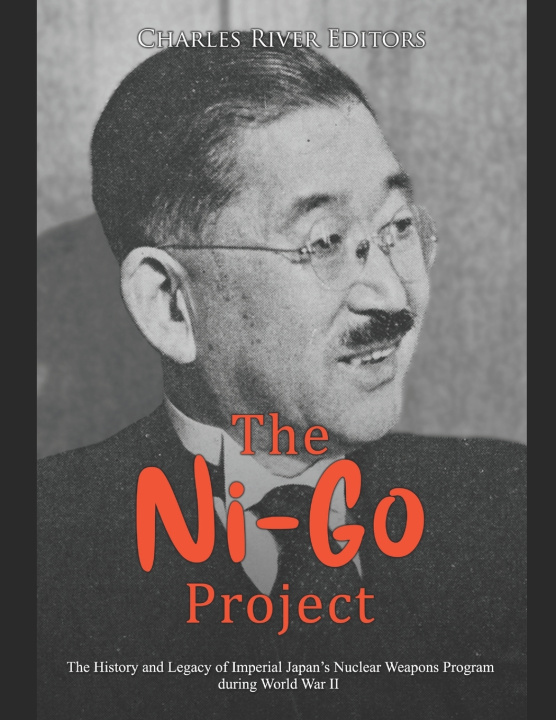
Ni-Go Project
The History and Legacy of Imperial Japan's Nuclear Weapons Program during World War II
 Angleščina
 26 b
26 b
Do 30 dni za vračilo
Drugi so kupili tudi
 /
/
 Mehka
Mehka
 25.46
€
25.46
€


 /
Mehka
22.65
€
/
Mehka
22.65
€



 /
Mehka
33.29
€
/
Mehka
33.29
€


 /
Mehka
22.85
€
/
Mehka
22.85
€


*Includes pictures
*Includes a bibliography for further reading
"What if the enemy should get the atomic bomb before we did! We could not run the mortal risk of being outstripped in this awful sphere." - Winston Churchill
Before the Second World War, military conflicts were fought under orthodox conditions, usually termed "conventional warfare," but several innovations had significantly changed combat, leading inextricably to the race for a nuclear weapon in the 1930s and 1940s. Conflicts had been fought by armies on horseback with guns of varying sophistication since the 16th century, but mechanized warfare and machine guns changed this calculus and set the stage for future combat by the end of World War I. Other sinister changes entered the fray during this conflict, such as chemical weapons like chlorine and mustard gas. The total warfare brought about by World War I and ensuing wars like the Spanish Civil War made the quest for the most powerful weapons somewhat necessary.
Tens of millions died during World War II as the warring powers raced to create the best fighter planes, tanks, and guns, and eventually that race extended to bombs which carried enough power to destroy civilization itself. While the war raged in Europe and the Pacific, a dream team of Nobel Laureates was working on the Manhattan Project in America, a program kept so secret that Vice President Harry Truman didn't know about it until he took the presidency after FDR's death in April 1945.
The Manhattan Project would ultimately yield the "Little Boy" and "Fat Man" bombs that released more than 100 Terajoules of energy at Hiroshima and Nagasaki, but as it turned out, the Axis were not far behind with their own nuclear weapons program. When the Nazis' quest for a nuclear weapon began in earnest in 1939, no one really had a handle on how important nuclear weapons would prove to war and geopolitics. The attacks on Hiroshima and Nagasaki in August 1945, along with the Cold War-era tests and their accompanying mushroom clouds, would demonstrate the true power and terror of nuclear weapons, but in the late 1930s these bombs were only vaguely being thought through, particularly after the successful first experiment to split the atom by a German scientist. The nuclear age itself was in its infancy, barely 35 years old, but within a few short years the advent of nuclear war loomed over the world and the prospect of the enemy winning the nuclear race kept Allied leaders awake at night.
In November 1921, roughly a year after the Treaty of Versailles came into effect, Japan, Britain, and the United States gathered to sign another treaty of disarmament at the Washington Naval Conference. However, Japan opted against renewing the pact in the mid-1930s, and around the same time, Germany openly breached the terms of the former treaty and began to restock their weapons. This gave rise to the birth of a new and unprecedented arms race, one that had catastrophically disastrous consequences about a decade later.
Although their project is typically overlooked given the American use of the bombs and then the Soviets following suit early on in the Cold War, the Japanese avidly pursued nuclear weapons as well. The Ni-Go Project: The History and Legacy of Imperial Japan's Nuclear Weapons Program during World War II examines Japan's race to reach the ultimate goal during the war, how they went about their objectives, and why they failed. Along with pictures of important people, places, and events, you will learn about Japan's nuclear weapons program like never before.


O knjigi
Angleščina

Podarite to knjigo še danes
To je povsem preprosto
1 Dodajte knjigo v košarico in izberite dostavo kot darilo 2 V zameno vam bomo poslali kupon 3 Knjiga bo dostavljena na naslov obdarovancaMorda bi vas zanimalo tudi





 /
Mehka
6.21
€
/
Mehka
6.21
€





Pozdravljeni! Sem Libroamiko, vaš knjižni svetovalec.
Kako vam lahko pomagam?