
 Kontakt
 Kako nakupovati
Dostava
Svetovalec pri nakupu
Newfoundland
 Angleščina
 42 b
42 b
Do 30 dni za vračilo

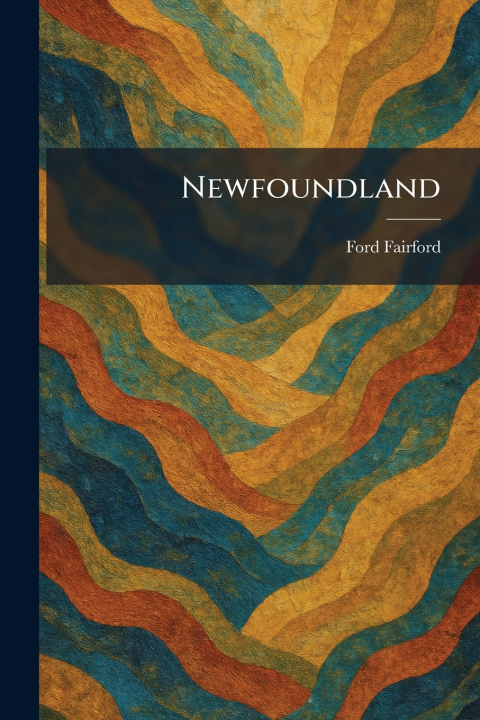
"Newfoundland" provides a vivid and informative account of one of the North Atlantic's most distinctive regions during the early twentieth century. Authored by Ford Fairford, this work serves as both a travelogue and a historical survey, detailing the rugged geography, economic foundations, and cultural life of the island. Fairford explores the vital role of the fishing industry, particularly the cod trade, while also highlighting the development of the interior through forestry and mining.
The narrative captures the essence of Newfoundland's unique identity, from the isolated charm of its coastal outports to the growing modernization of its urban centers. Readers will find insightful observations on the island's history of settlement, its strategic importance, and the character of its people. "Newfoundland" is an essential resource for those interested in maritime heritage, colonial history, and the evolution of Atlantic Canada. Through its descriptive prose, the book documents the social and economic landscape of a territory poised between its colonial past and a developing future.
This work has been selected by scholars as being culturally important, and is part of the knowledge base of civilization as we know it. This work was reproduced from the original artifact, and remains as true to the original work as possible. Therefore, you may see the original copyright references, library stamps (as most of these works have been housed in our most important libraries around the world), and other notations in the work.
This work is in the public domain in the United States of America, and possibly other nations. Within the United States, you may freely copy and distribute this work, as no entity (individual or corporate) has a copyright on the body of the work.
As a reproduction of a historical artifact, this work may contain missing or blurred pages, poor pictures, errant marks, etc. Scholars believe, and we concur, that this work is important enough to be preserved, reproduced, and made generally available to the public. We appreciate your support of the preservation process, and thank you for being an important part of keeping this knowledge alive and relevant.


O knjigi
Angleščina
