
 Kontakt
 Kako nakupovati
Dostava
Svetovalec pri nakupu
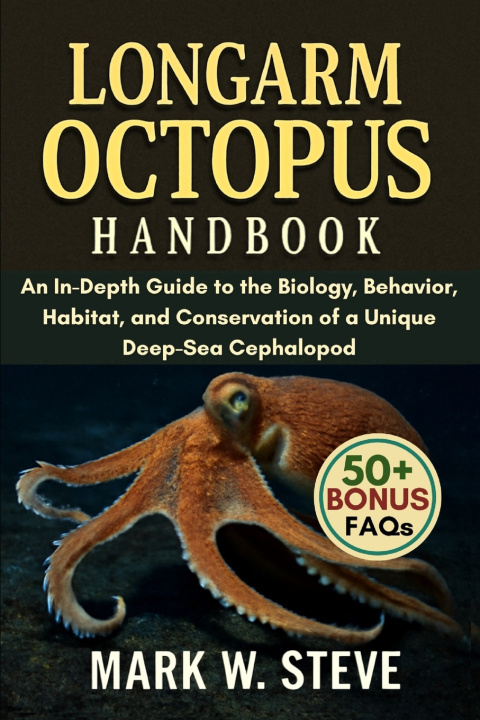
LONGARM OCTOPUS HANDBOOK
An In-Depth Guide to the Biology, Behavior, Habitat, and Conservation of a Unique Deep-Sea Cephalopod
 Angleščina
 32 b
32 b
Do 30 dni za vračilo

Introduction to the Longarm Octopus
Overview of the Species, Its Discovery, and Significance in Marine Ecosystems
The longarm octopus is one of the most fascinating members of the cephalopod world, distinguished not only by its extraordinary intelligence but also by its elongated, delicate arms that give the species both its common name and its remarkable presence in the ocean. Unlike many other octopus species that have a more compact build, the longarm octopus is instantly recognizable because of the proportion of its arms to its body. Its arms can stretch to several times the length of its mantle, making it appear far larger than it actually is when fully extended. This adaptation is not just cosmetic; it plays a critical role in its survival strategy, foraging methods, and mobility. For centuries, the longarm octopus went unnoticed by most people outside of coastal fishing communities and marine scientists, but with the growing interest in ocean exploration, its unique morphology and behavior have increasingly attracted attention. Early records of longarm octopuses often came from fishermen's accounts who described a mysterious octopus with arms far longer than those they were used to encountering. These reports were initially dismissed or conflated with tales of giant squid or mythical sea creatures, but as modern marine biology developed, the species was identified, studied, and categorized with greater precision. The longarm octopus is now considered an essential subject of marine study because it demonstrates how diverse evolutionary pathways can lead to extraordinary adaptations within cephalopods.
The discovery and classification of the longarm octopus were significant because they helped scientists better understand the immense variety within the Octopodidae family. While most octopuses share the same fundamental body plan-a soft, bulbous mantle, eight flexible arms, and advanced sensory systems-the longarm octopus deviates from the norm in ways that reveal new insights into evolution and adaptation. Its unusually long appendages, specialized for sweeping across sandy or muddy seafloors, highlight how even within the same group of animals, natural selection can favor drastically different body proportions and behaviors depending on habitat and ecological role. This discovery added to the growing body of evidence that cephalopods are not only highly intelligent but also highly specialized creatures capable of exploiting very specific ecological niches.
The significance of the longarm octopus in marine ecosystems cannot be overstated. As a mid-level predator, it serves as both hunter and prey, balancing the intricate food webs of coastal and benthic environments. The species preys upon small crustaceans, mollusks, and fish, capturing them with its extended reach while minimizing the risk of exposing its body to potential threats. This feeding behavior ensures that populations of smaller marine organisms remain regulated, preventing overpopulation that could destabilize local ecosystems. At the same time, the longarm octopus itself is prey for larger fish, sharks, and marine mammals, meaning it forms a crucial link between smaller and larger organisms within its environment. Without species like the longarm octopus, ecosystems would lose part of the regulatory framework that keeps them stable.
Another layer of ecological significance lies in the octopus's behavior as an ecosystem engineer. Through its foraging habits, the longarm octopus disturbs sediments on the ocean floor, which in turn influences nutrient cycles, oxygen levels, and microhabitat availability for other organisms such as worms, shellfish, and bacteria. This sediment-turning activity is comparable to how earthworms aerate soil on land, subtly shaping the health and productivity of their environments.


O knjigi
Angleščina

Podarite to knjigo še danes
To je povsem preprosto
1 Dodajte knjigo v košarico in izberite dostavo kot darilo 2 V zameno vam bomo poslali kupon 3 Knjiga bo dostavljena na naslov obdarovancaPozdravljeni! Sem Libroamiko, vaš knjižni svetovalec.
Kako vam lahko pomagam?