
 Kontakt
 Kako nakupovati
Dostava
Svetovalec pri nakupu
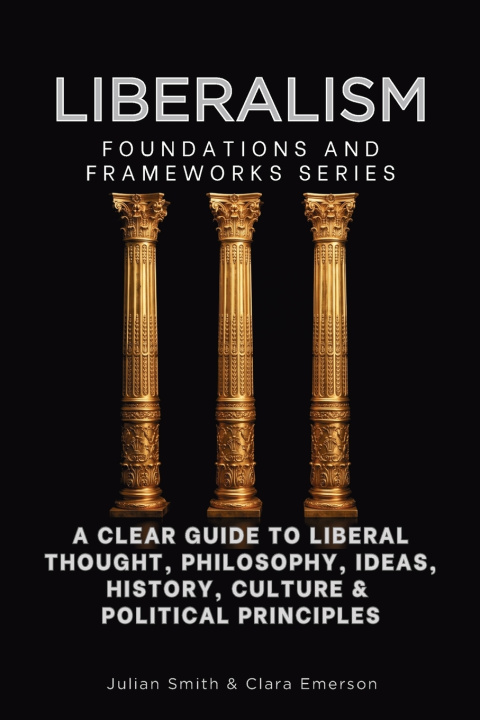
Liberalism, Foundations and Frameworks Series
A Clear Guide to Liberal Thought, Philosophy, Ideas, History, Culture & Political Principles
 Angleščina
 38 b
38 b
 Novo
Novo
Do 30 dni za vračilo

Liberalism is one of the most used and least agreed-upon words in politics. In the United States it marks the left. In much of Europe it points to free markets and limited government. In philosophy it covers a 350-year tradition that includes John Locke, John Stuart Mill, Friedrich Hayek, and John Rawls, thinkers who would have disagreed with each other about almost every policy question of their day. This book explains the tradition all three uses are borrowing from.
Eight chapters move through liberal thought from the religious wars of the 17th century to arguments happening right now about speech, migration, markets, and majority rule. The book stays with ideas rather than dates, and each chapter builds on the one before it, so you can read straight through and finish with a picture that holds together instead of a pile of names.
The chapters cover:
- The core claim, and how it separates liberalism from libertarianism, progressivism, and conservatism
- Natural rights, the social contract, and the difference between negative and positive liberty
- Locke on consent and the right to resist illegitimate authority, Montesquieu on separated powers, Adam Smith on voluntary exchange, and Kant on why human dignity cannot be traded away for good outcomes
- Mill's harm principle and the classical defense of dissent
- The American founding and the French Revolution, including the Terror and what it taught later thinkers about unchecked virtue
- The crisis industrial capitalism created, and how T.H. Green, Lloyd George, L.T. Hobhouse, and John Maynard Keynes rebuilt the tradition around a welfare state the earlier generation never imagined
- Rawls on justice as fairness, Berlin on two concepts of liberty, Hayek on planning, Popper on the open society, and Dworkin on rights as trumps
- Tolerance, multiculturalism, secularism, Will Kymlicka on minority group rights, and where liberal feminism parts ways with other feminist traditions
- Communitarian, post-colonial, and populist objections, presented at full strength rather than in caricature
Written for students in a first political theory course, readers who follow politics and want the ideas underneath the argument, teachers looking for a clear text to assign, and anyone who finds this tradition unconvincing and would rather argue with the real version of it.
Reference material runs through the back of the book. A four-century timeline records the publications, laws, and turning points that shaped liberal politics, from Magna Carta and the Glorious Revolution to the People's Budget and the collapse of the Soviet Union. A terms and definitions section gives you working definitions of every concept used in the chapters. A works cited and recommended readings list points you to the primary texts and the best secondary scholarship. Read it once and you will be able to follow almost any serious argument about rights, freedom, markets, and the limits of government, including the arguments you disagree with.


O knjigi
Angleščina
Kategorije

Podarite to knjigo še danes
To je povsem preprosto
1 Dodajte knjigo v košarico in izberite dostavo kot darilo 2 V zameno vam bomo poslali kupon 3 Knjiga bo dostavljena na naslov obdarovancaPozdravljeni! Sem Libroamiko, vaš knjižni svetovalec.
Kako vam lahko pomagam?