
 Kontakt
 Kako nakupovati
Dostava
Svetovalec pri nakupu
Lautman
 Francoščina
 63 b
63 b
Do 30 dni za vračilo
Morda bi vas zanimalo tudi



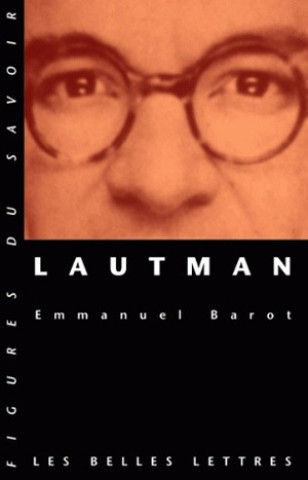
Born into a Jewish family from Romania, Albert Lautman (1908–1944) followed a career not only similar to, but directly associated with, that of Jean Cavaillès (1903–1944), a friend a few years his senior. Like the latter, he was a graduate of the Ecole Normale and the author of two doctoral theses on the philosophy of mathematics. A member of the French Resistance, he was shot by the German Army in 1944, after being denounced for helping Allied and French aviators escape from Spain.Highly knowledgeable in the sciences of his day, in the “New Physics” and, more importantly, in mathematics as those fields emerged during the inter-war period, he left behind a dense work praised in his lifetime by Bachelard, which reflected diverse influences ranging from general philosophy (mainly that of Plato, Kant, Hegel and early Heidegger) to mathematics based upon the scientific theories of Gauss, Poincaré and Cartan, not to mention the epistemological ideas of Herbrand, Wittgenstein and Hilbert. Lautman’s key intuition which makes his work an intriguing portal – one all the more vital because it provides clear and enlightening methods by which to explore the “mathematical continent” – is that Plato can be found behind the “mother structures” of mathematical theories, which is why whenever the aim is to further knowledge of physical reality, mathematicians say that they need to “rewrite Timaeus.”Lautman was an outstanding philosopher, capable of mobilizing the support of the most celebrated names of the philosophical tradition.


O knjigi
Francoščina

Podarite to knjigo še danes
To je povsem preprosto
1 Dodajte knjigo v košarico in izberite dostavo kot darilo 2 V zameno vam bomo poslali kupon 3 Knjiga bo dostavljena na naslov obdarovancaPozdravljeni! Sem Libroamiko, vaš knjižni svetovalec.
Kako vam lahko pomagam?