
 Kontakt
 Kako nakupovati
Dostava
Svetovalec pri nakupu
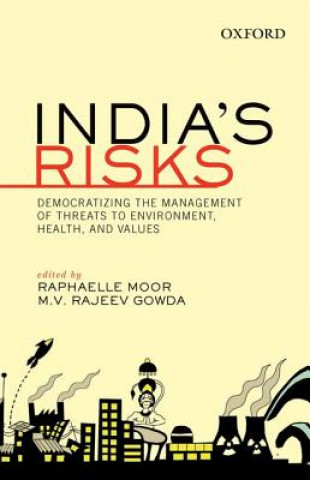
India's Risks
 Angleščina
 175 b
175 b
30 dni za vračilo blaga
Drugi so kupili tudi



 /
/
 Mehka
Mehka
 54.61
€
54.61
€











India is grappling with a wide range of risks-from HIV/AIDS, maternal mortality, and natural hazards to industrial disasters, nuclear power, GM crops, and large-scale environmental destruction. Whilst the last 40 years have seen the emergence of a multidisciplinary field of research on risk in the West, it has been curiously absent in India. This volume seeks to fill this void. For the first time, Indian and Western scholars and practitioners across the fields of psychology, anthropology, law, politics, sociology, public health, philosophy, science, and architecture bring together insights on the theory of risk, lessons from the West, and the realities of risk in India. The following issues are examined: What counts as an 'acceptable' risk, and who decides? How should divergent perceptions of risks be reconciled? What is the dividing line between science and policy? What is the politics of identifying, characterizing, and assessing risks in India? Aimed at policymakers, practitioners, academics, and the general public, this volume challenges many of the dominant perspectives and approaches to risk in India. It criticizes the prevalent tendency in India to study risk through a narrowly technical framework which also ignores the social context within which risks originate. Instead, this volume underlines the inherently political, social, and ethical nature of risk and proposes that policymakers adopt a more multidimensional conceptual lens for analysing and governing risks in India.


O knjigi
Angleščina

Podarite to knjigo še danes
To je povsem preprosto
1 Dodajte knjigo v košarico in izberite dostavo kot darilo 2 V zameno vam bomo poslali kupon 3 Knjiga bo dostavljena na naslov obdarovancaMorda bi vas zanimalo tudi






 /
Mehka
58.55
€
/
Mehka
58.55
€






Pozdravljeni! Sem Libroamiko, vaš knjižni svetovalec.
Kako vam lahko pomagam?