
 Kontakt
 Kako nakupovati

Dostava
Svetovalec pri nakupu
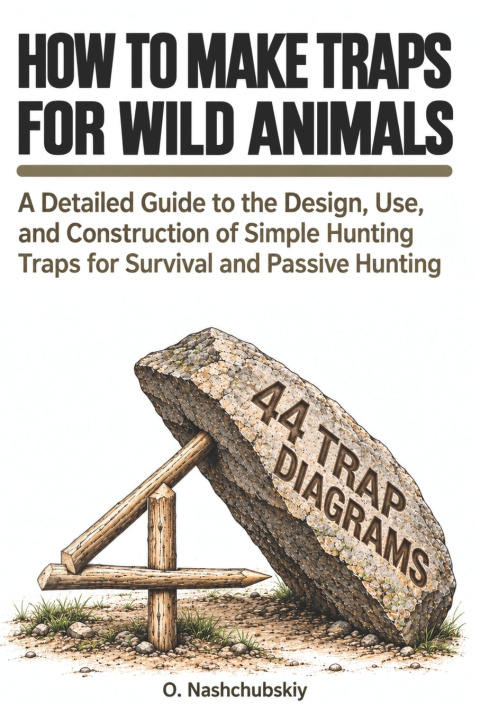
How to Make Traps for Wild Animals
A Detailed Guide to the Design, Use, and Construction of Simple Hunting Traps for Survival and Passive Hunting. 44 Trap Diagrams
 Angleščina
 37 b
 Novo
Do 30 dni za vračilo

Could you build a working animal trap from simple materials-and understand why it works instead of merely copying a diagram?
How to Make Traps for Wild Animals is a practical guide to the construction, mechanics, placement, and adjustment of simple hunting traps for survival and passive hunting.
Inside, you'll find 44 trap designs, each explained as a mechanical system rather than just shown as a picture. The book breaks down how energy, supports, triggers, cords, levers, bait, and working elements interact-so you can understand what keeps a trap set, what causes it to release, and what happens next.
You'll learn how to:
- Understand the mechanical principles behind spring snares, deadfalls, platform triggers, basket traps, fishing hook-setters, and other designs.
- Select and prepare sticks, forked supports, cord, notches, grooves, crossbars, and improvised components.
- Read tracks and other signs of animal activity to identify likely travel routes.
- Choose a location based on terrain, bottlenecks, feeding areas, water, shelter, and direction of movement.
- Match a trap design to the materials and conditions actually available in the field.
- Adjust trigger sensitivity, friction, geometry, leverage, and tension.
- Diagnose false activations, binding, unstable supports, and failures to trigger.
- Account for rain, moisture, snow, freezing conditions, changing soil, and other environmental effects.
- Inspect, repair, test, and reset a mechanism after use.
Rather than treating traps as isolated tricks to memorize, this guide teaches one repeatable mechanical sequence:
energy source → retention → trigger → release → movement of the working element
That approach makes the 44 designs easier to understand, compare, troubleshoot, and adapt to real conditions.
With detailed explanations of construction, setting, placement, adjustment, common mistakes, final checks, and illustrated trap diagrams, this book is designed for readers interested in survival skills, preparedness, bushcraft, self-reliance, traditional trapping knowledge, and passive food procurement.
Learn the mechanism. Read the terrain. Choose the right design. Build with purpose instead of copying blindly.


O knjigi
Angleščina

Podarite to knjigo še danes
To je povsem preprosto
1 Dodajte knjigo v košarico in izberite dostavo kot darilo 2 V zameno vam bomo poslali kupon 3 Knjiga bo dostavljena na naslov obdarovancaPozdravljeni! Sem Libroamiko, vaš knjižni svetovalec.
Kako vam lahko pomagam?