
 Kontakt
 Kako nakupovati

Dostava
Svetovalec pri nakupu
 Angleščina
 56 b
 Novo
Do 30 dni za vračilo

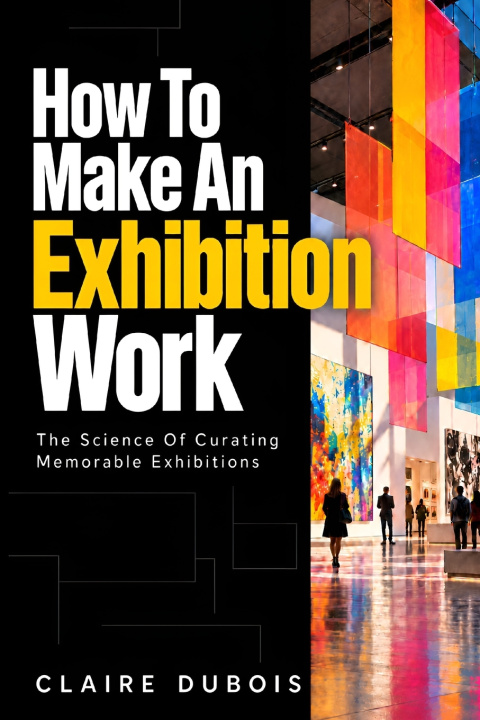
What makes an exhibition truly work? Is it the objects on display, the story they tell, the space they occupy, or the experience they create?
Every exhibition begins with an idea, but transforming that idea into something meaningful is far more complicated than arranging objects in a room. Even exhibitions featuring extraordinary artworks and historical treasures can leave visitors confused, disengaged, or overwhelmed. Poorly considered layouts, ineffective interpretation, competing narratives, and overlooked visitor needs can undermine even the most ambitious curatorial vision. The challenge is not simply to create an exhibition that looks impressive, but one that communicates, engages, educates, and leaves a lasting impression.
How to Make an Exhibition Work reveals the principles behind successful exhibitions and explains how to put them into practice. Whether you are an aspiring curator, a museum professional, an exhibition designer, an art student, or simply fascinated by the world of museums and galleries, this book will transform how you understand, experience, and approach exhibition-making.
Drawing on established curatorial theories, museum studies, environmental psychology, visitor behavior research, and professional exhibition standards, the book explores what actually influences an exhibition's success. Rather than relying on subjective opinions or abstract artistic ideals, it examines documented research, meaningful statistics, and real-world examples to explain why certain approaches succeed, why others fail, and what we can learn from both. Complex ideas are presented in clear, engaging language, making the subject accessible without compromising its intellectual depth.
Through 24 carefully developed chapters, you will discover how curators turn ideas into compelling narratives, how architecture and spatial arrangements influence visitor behavior, how lighting and visual design shape perception, and how interpretation can make unfamiliar subjects fascinating. You will also explore the psychology of attention and memory, the ethical responsibilities of museums, accessible exhibition design, interactive technologies, audience engagement, exhibition budgets, and the practical challenges of bringing an ambitious project to life. Original illustrations clarify important concepts, while a fictional exhibition developed throughout the book demonstrates how these principles translate into actual curatorial decisions.
The discussion is enriched by documented exhibitions, including The Family of Man, Treasures of Tutankhamun, and Mining the Museum, alongside instructive controversies that reveal what can happen when curatorial intentions, public expectations, and institutional responsibilities collide. Supported by an extensive reference section, the book connects scholarly knowledge with the decisions that exhibition-makers face in practice.
An exhibition is more than a collection of objects. It is a carefully constructed encounter between ideas, evidence, space, and people. Understanding how those elements work together is the foundation of exceptional exhibition-making. Whether you hope to create your own exhibition, improve an existing one, pursue a career in curatorial practice, or develop a deeper appreciation of museums, How to Make an Exhibition Work offers the knowledge, perspective, and practical understanding to see exhibitions in an entirely new way.


O knjigi
Angleščina

Podarite to knjigo še danes
To je povsem preprosto
1 Dodajte knjigo v košarico in izberite dostavo kot darilo 2 V zameno vam bomo poslali kupon 3 Knjiga bo dostavljena na naslov obdarovancaPozdravljeni! Sem Libroamiko, vaš knjižni svetovalec.
Kako vam lahko pomagam?