
 Kontakt
 Kako nakupovati
Dostava
Svetovalec pri nakupu
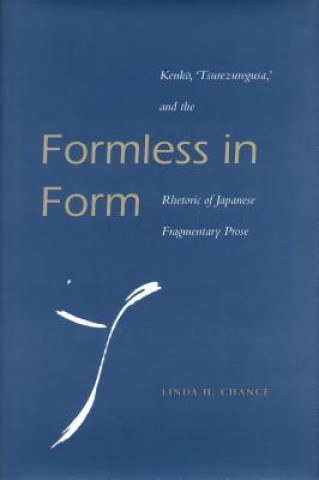
Formless in Form
Kenko, Tsurezuregusa and the Rhetoric of Japanese Fragmentary Prose
 Angleščina
 186 b
186 b
Do 30 dni za vračilo
Morda bi vas zanimalo tudi


What makes a work of literature readable? This book asks that question of one of the classics of Japanese literature, the Tsurezuregusa (Essays in Idleness) by Kenko (1283-1352), a collection of brief, fragmentary reflections on a number of subjects. In Japanese literary history the work is classified as one of the first collections of zuihitsu, or informal essay. This first extended critical treatment of Tsurezuregusa goes back to its author and his time to rebuild the discursive world of the early fourteenth century and to examine such matters as whether genre labels assist reading or obscure significant comparisons and contexts. The book presents compelling arguments against considering Tsurezuregusa as an example of zuihitsu; instead, the text is treated as a deliberate, controlled effort by Kenko to force the reader to confront the impermanent and contingent nature of existence through experiencing the text. The book develops this view by studying the collaborative strategies operating between writers and readers in medieval Japan, the intellectual intent and devices of Kenko s text, and the many kinds of writing on which it draws. We learn how a text with a commitment to shaping responses to the world is simultaneously dedicated to exploding the reader s identification with the presumably unchanging facts of existence.


O knjigi
Angleščina

Podarite to knjigo še danes
To je povsem preprosto
1 Dodajte knjigo v košarico in izberite dostavo kot darilo 2 V zameno vam bomo poslali kupon 3 Knjiga bo dostavljena na naslov obdarovancaPozdravljeni! Sem Libroamiko, vaš knjižni svetovalec.
Kako vam lahko pomagam?