
 Kontakt
 Kako nakupovati
Dostava
Svetovalec pri nakupu
 Angleščina
 75 b
75 b
30 dni za vračilo blaga

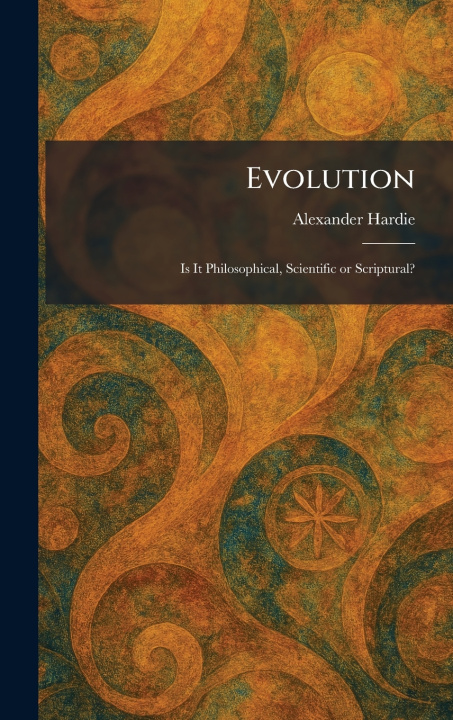
"Evolution; Is It Philosophical, Scientific or Scriptural?" is a rigorous examination of evolutionary theory through the lenses of theology, logic, and empirical observation. Written by Alexander Hardie, this work addresses the profound intellectual and spiritual tensions that emerged during the early 20th century as modern scientific theories challenged traditional religious worldviews. The text systematically investigates whether the Darwinian model of development can be harmonized with established philosophical principles and the literal interpretations of the Holy Scriptures.
The author meticulously deconstructs contemporary arguments for evolution, questioning their scientific validity and their impact on the moral and spiritual fabric of society. By contrasting the changing nature of scientific hypotheses with what he identifies as the immutable truths of the Bible, Hardie provides a comprehensive critique intended for those seeking to defend scriptural authority. This work stands as a significant historical artifact of the creation-evolution controversy, offering insight into the theological responses to modernity. It is an essential resource for readers interested in the history of science, the evolution of religious thought, and the long-standing debate between faith and secular reason.
This work has been selected by scholars as being culturally important, and is part of the knowledge base of civilization as we know it. This work was reproduced from the original artifact, and remains as true to the original work as possible. Therefore, you may see the original copyright references, library stamps (as most of these works have been housed in our most important libraries around the world), and other notations in the work.
This work is in the public domain in the United States of America, and possibly other nations. Within the United States, you may freely copy and distribute this work, as no entity (individual or corporate) has a copyright on the body of the work.
As a reproduction of a historical artifact, this work may contain missing or blurred pages, poor pictures, errant marks, etc. Scholars believe, and we concur, that this work is important enough to be preserved, reproduced, and made generally available to the public. We appreciate your support of the preservation process, and thank you for being an important part of keeping this knowledge alive and relevant.


O knjigi
Angleščina
