
 Kontakt
 Kako nakupovati
Dostava
Svetovalec pri nakupu
Evolution's Iceberg
 Angleščina
 52 b
52 b
30 dni za vračilo blaga

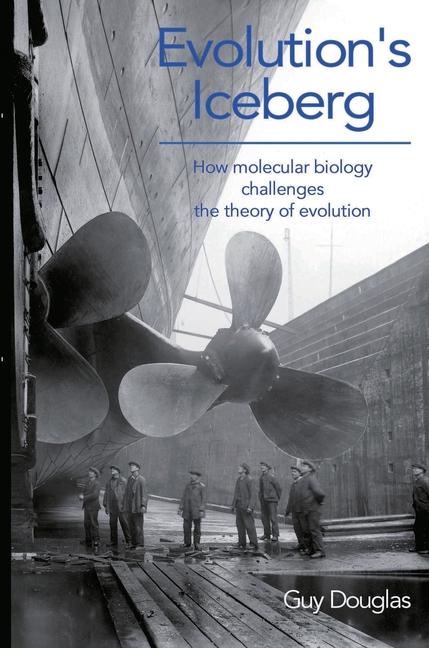
Shortly before midnight on Sunday 14th April 1912, RMS Titanic struck an iceberg in the North Atlantic and sank at 2.17 am. What made this tragedy particularly shocking at the time was that Titanic was widely believed to be unsinkable - by passengers, crew and by the public at large. Today Darwin's theory of evolution enjoys a similar "unsinkable" reputation.
The thesis of this book is that 19th century Darwinian science, developing as it did in an age that also gave rise to supreme confidence in Titanic's unsinkability, has collided with the 'iceberg' of 21st century molecular biology. We conduct an inquiry into the evidence and its worldview implications.
What if - just as Titanic had design flaws that rendered it unsinkable only in a limited sense - what if the science underpinning the Theory of Evolution turns out to be valid only in a strictly limited sense?
The amazing discoveries in the late 20th and especially in the early 21st century - of the exquisite micro-molecular machinery and organisational complexity, together with the hierarchical layers of regulatory control systems inside living cells - have become Evolution's 'iceberg'.
Part 1 of this highly accessible account begins by exploring questions like: What is "science"?, What is "evolution"?, Has "science" ever got things wrong? Do all scientific disciplines speak with equal authority?
Part 2 investigates five failed predictions of neo-Darwinism now that RMS Evolution has collided with the 'molecular biology iceberg'. Just as Titanic sank because 5 watertight compartments were breached by the iceberg, we go down 'below decks' to inspect the damage inside five putatively watertight compartments - five different strands of evidence claimed to support the theory of evolution - the origin of life, the power of natural selection to invent, the fossil record, embryology and genetics, and human evolution.
Part 3 asks why it is that most 'smart' people still believe the grand claims of evolution to be true and why our academic, media and educational institutions still fervently promote the orthodox paradigm while failing to present the counter-evidence. We'll also explore a theory that better explains the origin of biological information - Intelligent Design.
Occasional allusions to the Titanic metaphor throughout help to illuminate and elucidate the science.


O knjigi
Angleščina

Podarite to knjigo še danes
To je povsem preprosto
1 Dodajte knjigo v košarico in izberite dostavo kot darilo 2 V zameno vam bomo poslali kupon 3 Knjiga bo dostavljena na naslov obdarovancaPozdravljeni! Sem Libroamiko, vaš knjižni svetovalec.
Kako vam lahko pomagam?