
 Kontakt
 Kako nakupovati
Dostava
Svetovalec pri nakupu
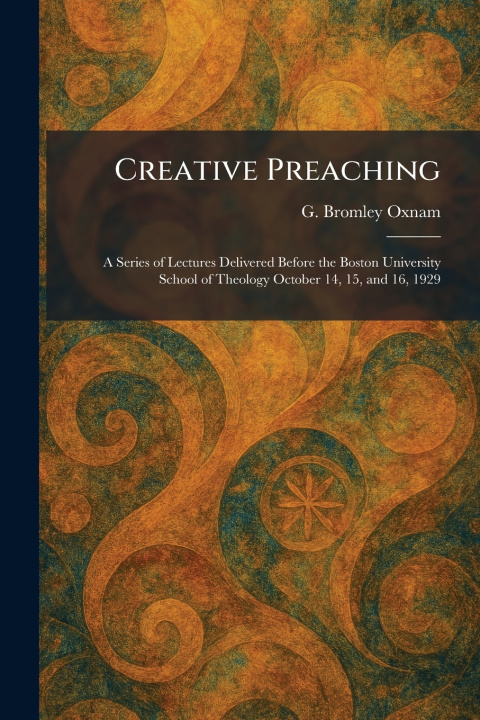
Creative Preaching
A Series of Lectures Delivered Before the Boston University School of Theology October 14, 15, and 16, 1929
 Angleščina
 57 b
57 b
30 dni za vračilo blaga

"Creative Preaching" is a profound collection of lectures delivered at the Boston University School of Theology in October 1929. Edited by G. Bromley Oxnam, this volume assembles the wisdom of several distinguished religious leaders and scholars who sought to revitalize the art of the sermon during a period of significant social and intellectual change. The work functions as both a practical manual for the pulpit and a scholarly examination of the preacher's role in contemporary society.
The contributors address the foundational elements of effective ministry, emphasizing that successful preaching requires a blend of intellectual honesty, spiritual fervor, and creative imagination. Through these lectures, readers explore the challenges of communicating the Gospel to a modern audience, the discipline of sermon construction, and the vital connection between the personal character of the minister and the power of their message. The text highlights the importance of making theological truths accessible and resonant without sacrificing their depth.
This volume remains a significant resource for clergy, theological students, and historians of American Protestantism. By focusing on the "creative" aspect of homiletics, it offers timeless guidance for anyone dedicated to the craft of religious oratory and the spiritual leadership of a community.
This work has been selected by scholars as being culturally important, and is part of the knowledge base of civilization as we know it. This work was reproduced from the original artifact, and remains as true to the original work as possible. Therefore, you may see the original copyright references, library stamps (as most of these works have been housed in our most important libraries around the world), and other notations in the work.
This work is in the public domain in the United States of America, and possibly other nations. Within the United States, you may freely copy and distribute this work, as no entity (individual or corporate) has a copyright on the body of the work.
As a reproduction of a historical artifact, this work may contain missing or blurred pages, poor pictures, errant marks, etc. Scholars believe, and we concur, that this work is important enough to be preserved, reproduced, and made generally available to the public. We appreciate your support of the preservation process, and thank you for being an important part of keeping this knowledge alive and relevant.


O knjigi
Angleščina
Kategorije
