
 Kontakt
 Kako nakupovati
Dostava
Svetovalec pri nakupu
 Angleščina
 63 b
63 b
30 dni za vračilo blaga
Drugi so kupili tudi










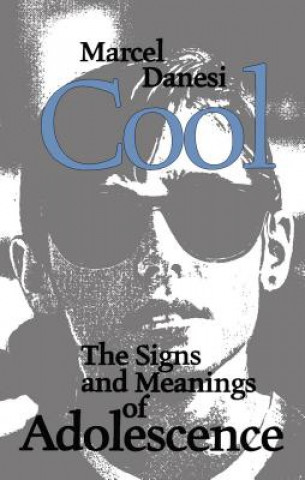
The image of restless, apathetic, mopish, awkward teenagers who listen to loud, screeching music when they are not on the phone, and who insist on dressing, wearing their hair, and behaving exactly like the friends they cannot seem to live without, has become a fixture of the modern social landscape.The emergence of certain behaviours (facial expressions, linguistic styles, dress codes, musical preferences, etc.) on the developmental timetable of children is a sign that they have entered a transitional period. The dramatic changes in physical appearance that occur during adolescence, and the emotional changes that accompany them, are traumatic. Teenagers naturally become inordinately concerned about their appearance and behaviour, and they believe that everyone is constantly observing them. This is why they talk all the time about how others act, behave, and appear. Language, dress, musical tastes, and other symbolic systems become the concrete means for identifying with peers. Teenagerhood is a socially constructed time-frame that channels the physiological and emotional changes that occur at puberty into patterns of symbolic behavior. These patterns are then reinforced by the media.This book represents both a synthesis of Marcel Danesi's research on the semiotics of modern adolescence, and his own interpretation of the significance and implications of our teenage culture. It constitutes a semiotic portrait of the teenager and of the factors that have led to the construction of the teenage persona and culture.Danesi makes a distinction between adolescence as psychobiological period of human growth and development and teenagerhood as a socially induced mindset that accompanies it. He focuses on the central behavioral trait of teenagerhood -- coolness; he defines it and discusses its emergence at or around puberty, and draws up an 'anatomy' of the behaviors associated with it. He discusses the language of teenagers, which he calls 'pubilect,' and concludes with observations on the etiology, evolution, and future course of teenagerhood. Cool is intended not only for semioticians, as a documentation of a specific form of social semiosis, but also for parents and educators, and for teenagers themselves.


O knjigi
Angleščina

Podarite to knjigo še danes
To je povsem preprosto
1 Dodajte knjigo v košarico in izberite dostavo kot darilo 2 V zameno vam bomo poslali kupon 3 Knjiga bo dostavljena na naslov obdarovancaMorda bi vas zanimalo tudi
 /
/
 Mehka
Mehka
 26.53
€
26.53
€





Pozdravljeni! Sem Libroamiko, vaš knjižni svetovalec.
Kako vam lahko pomagam?