
 Kontakt
 Kako nakupovati
Dostava
Svetovalec pri nakupu
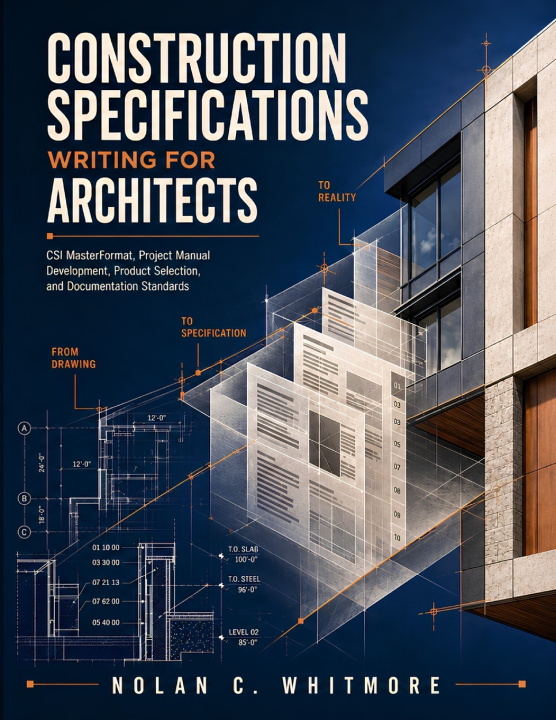
Construction Specifications Writing for Architects
CSI MasterFormat, Project Manual Development, Product Selection, and Documentation Standards
 Angleščina
 170 b
170 b
 Novo
Novo
Do 30 dni za vračilo

A drawing set can be beautiful, fully coordinated, and still lose the argument on site. When a contractor asks what "high quality" actually means, or installs something that satisfies the note on the plan but not the intent behind it, the answer is not in the drawings. It is in the written documents - or it is missing from them.
Most architects learn to draw long before they learn to specify. Written documentation is often assembled late, under deadline, by copying sections from the last project and trusting the edits caught everything. The results are familiar: language too vague to enforce, requirements that quietly contradict the drawings, citations to discontinued products and superseded standards, and a submittal process that generates paperwork without improving the building. The cost arrives during construction.
This comprehensive twenty-chapter reference treats specification writing as a professional discipline, not a clerical task performed at the end of a project. It runs from the contractual basis of written documentation, through the mechanics of drafting and the disciplines of product selection and coordination, to the technical territories where architectural requirements are hardest to write and the office systems that keep quality consistent between projects.
Inside this book you will
- Write requirements that can be measured, enforced, and defended, rather than adjectives that invite argument.
- Choose deliberately between describing a product, citing a standard, stating a performance outcome, or naming acceptable manufacturers - and know what each commits you to.
- Assemble a complete project manual, from procurement and contracting requirements through general requirements to the technical sections.
- Research and select products against project criteria, then document the decision so it holds when a substitution is proposed.
- Coordinate written requirements with drawings, schedules, and models through a repeatable pre-issue check rather than a last-minute scan.
- Build a submittal schedule proportionate to risk, and administer substitutions, changes, and field records without losing control.
- Establish office masters, editing systems, and quality routines that make documentation quality repeatable.
Key topics: the contract standing of written documents; the numbering system that organises technical content; the three-part section structure; the four specifying methods; the administrative division governing procedures and closeout; codes, standards, listings and tested assemblies; quality assurance, mockups, testing and inspection; submittals and delegated design; sustainability, material health and embodied carbon; the building envelope; openings, interiors and finishes; structural, site, civil and landscape interfaces; mechanical, electrical, plumbing and fire-protection boundaries; procurement, alternates, allowances and substitutions; construction administration; and office master governance.
The apparatus is built for working use: more than one hundred numbered sections, sixty figures, an applied exercise closing every chapter, and four appendices giving a division reference, a section drafting checklist, a submittal register template and a project manual review checklist, with a glossary and index.
Who it is for: practising architects who carry documentation responsibility, project architects preparing sets for issue, specifiers, and firm principals accountable for documentation standards - and the consultants, contractors and owners' representatives who must read and respond to what architects write.
Begin treating the written documents as the part of the set that speaks, and build the judgement to make them say exactly what you mean.


O knjigi
Angleščina

Podarite to knjigo še danes
To je povsem preprosto
1 Dodajte knjigo v košarico in izberite dostavo kot darilo 2 V zameno vam bomo poslali kupon 3 Knjiga bo dostavljena na naslov obdarovancaPozdravljeni! Sem Libroamiko, vaš knjižni svetovalec.
Kako vam lahko pomagam?