
 Kontakt
 Kako nakupovati
Dostava
Svetovalec pri nakupu
 Angleščina
 30 b
30 b
 Novo
Novo
30 dni za vračilo blaga

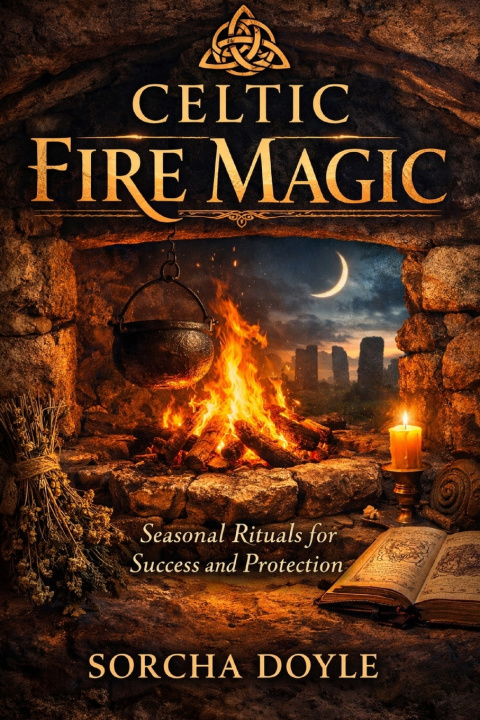
Celtic Fire Magic: Seasonal Rituals for Success and Protection
Fire has always been at the heart of Celtic life. Long before the great seasonal festivals were named or recorded, the people of Ireland and Scotland understood fire as something more than warmth and light. It was protection, continuity, and power. It witnessed oaths and blessed harvests. It marked the turning of the year and the boundaries of the home. It carried the authority of the ancestors and the vitality of the season. It was tended every day with the same seriousness that was given to every other thing that sustained life, because it was understood that the fire and the life it sustained were not separate concerns.
Celtic Fire Magic traces that understanding through the full arc of the sacred year, from the hearth fire at the centre of the home to the great seasonal fires of Imbolc, Beltane, midsummer, Lughnasadh, Samhain, and the deep of winter. Each season carries its own fire and its own specific purpose. The Imbolc flame illuminates the first stirring of creative intention in February's returning light. The spring fire releases what the winter has left behind. The twin fires of Beltane amplify what is already alive and moving. The midsummer fire asks the hardest questions about authority and integrity at the height of the year. The Lughnasadh fire honours skill earned through genuine discipline and offers its first fruits back to the cycle that produced them. The harvest flame guards what has been accumulated through the long months of work. The Samhain fire stands at the threshold between the old year and the new, maintaining discernment in the darkest night of the calendar. The winter fire endures.
Grounded throughout in documented Irish and Scottish folk tradition, early Irish law, Gaelic blessing custom, and the archaeological record of hearth practice across Britain and Ireland, this book draws a clear and consistent distinction between what the historical sources actually record and what later revivalism invented or embellished. The practices it offers are rooted in what people genuinely did, season by season, in the Celtic lands across many centuries, adapted for the contemporary practitioner without loss of historical integrity.
This is a book for those who want to work with fire as the Celtic tradition actually understood it: not as theatre, not as symbol, but as a living force that rewards sustained attention and serious engagement across the full turning of the year.


O knjigi
Angleščina
Kategorije

Podarite to knjigo še danes
To je povsem preprosto
1 Dodajte knjigo v košarico in izberite dostavo kot darilo 2 V zameno vam bomo poslali kupon 3 Knjiga bo dostavljena na naslov obdarovancaPozdravljeni! Sem Libroamiko, vaš knjižni svetovalec.
Kako vam lahko pomagam?