
 Kontakt
 Kako nakupovati
Dostava
Svetovalec pri nakupu
C++ and Object-Oriented Numeric Computing for Scientists and Engineers
 Angleščina
 207 b
207 b
30 dni za vračilo blaga
Drugi so kupili tudi




 /
/
 Trda
Trda
 25.61
€
25.61
€















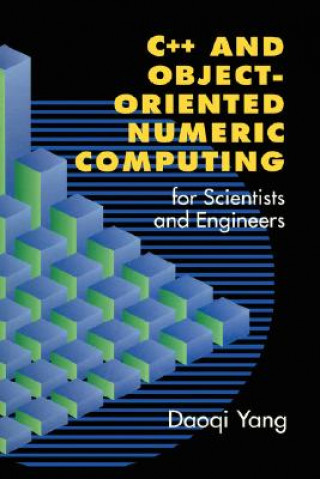
This new text/reference presents an accessible, concise, but rather complete, introduction to the C++ programming language with special emphasis on object-oriented numeric computation for scientific and engineering program development. The description of the language is in compliance with ISO/ANSI standards and is platform independent for maximum versatility. Requiring only basic calculus and linear algebra as prerequisites, the book introduces concepts, techniques, and standard libraries of C++ in a manner that is easy to understand and uses such familiar examples as vectors, matrices, integrals, and complex numbers. It also contains an introduction to C++ programs for applications with many numeric methods that are fundamental to science and engineering computing: polynomial evaluation and interpolation; numeric integration; methods for solving nonlinear equations; systems of linear equations in full, band, an d sparse matrix storage formats and ordinary and partial differential equations. Numerous techniques and examples are provided on how to reduce (C and Fortran) run-time overhead and improve program efficiency.This new text/reference presents an accessible, concise, but rather complete, introduction to the C++ programming language with special emphasis on object-oriented numeric computation for scientific and engineering program development. The description of the language is in compliance with ISO/ANSI standards and is platform independent for maximum versatility.Requiring only basic calculus and linear algebra as prerequisites, the book introduces concepts, techniques, and standard libraries of C++ in a manner that is easy to understand and uses such familiar examples as vectors, matrices, integrals, and complex numbers. It also contains an introduction to C++ programs for applications with many numeric methods that are fundamental to science and engineering computing: polynomial evaluation and interpolation; numeric integration; methods for solving nonlinear equations; systems of linear equations in full, band, and sparse matrix storage formats; and ordinary and partial differential equations. Numerous techniques and examples are provided on how to reduce (C and Fortran) run-time overhead and improve program efficiency.


O knjigi
Angleščina
Kategorije

Podarite to knjigo še danes
To je povsem preprosto
1 Dodajte knjigo v košarico in izberite dostavo kot darilo 2 V zameno vam bomo poslali kupon 3 Knjiga bo dostavljena na naslov obdarovancaMorda bi vas zanimalo tudi








 /
Mehka
14.98
€
/
Mehka
14.98
€

 /
Trda
36.45
€
/
Trda
36.45
€












Pozdravljeni! Sem Libroamiko, vaš knjižni svetovalec.
Kako vam lahko pomagam?