
 Kontakt
 Kako nakupovati
Dostava
Svetovalec pri nakupu
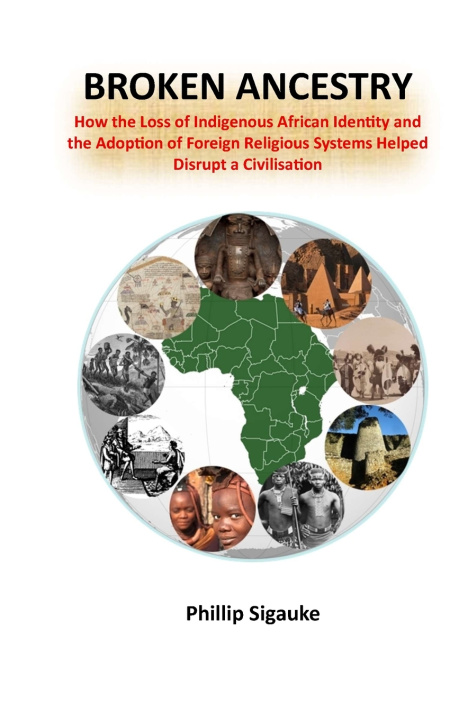
Broken Ancestry
How the Loss of Indigenous African Identity and the Adoption of Foreign Religious Systems Helped Disrupt a Civilisation
 Angleščina
 26 b
26 b
Do 30 dni za vračilo

Africa is one of the most religious regions in the world-yet it continues to struggle with political instability, economic dependency, environmental degradation, and fractured identity. Why?
This book argues that Africa's crisis is not a failure of faith, but a crisis of civilisational dislocation. Indigenous systems of governance, morality, land stewardship, and spiritual continuity were dismantled during slavery and colonialism before modern systems were meaningfully indigenised. As a result, Africans became deeply religious without becoming authors of their own institutions. Devout-but dependent. Faithful-but fragmented.
Through historical analysis and philosophical reflection, the book explores how precolonial African societies were structured around ancestral accountability, communal ethics, and land as sacred trust. Chiefs held land in stewardship for ancestors, the living, and the unborn. Morality was enforced through kinship, shame, and relational responsibility. Religion, law, ecology, and governance were interconnected within a shared cosmology.
Colonialism severed these connections. Sacred land became commodity. Communal identity gave way to economic individualism. Spiritual systems were replaced or reinterpreted through foreign theological frameworks that often portrayed Africa's past as darkness rather than civilisational foundation. Urbanisation intensified the rupture, disconnecting people from ancestral land and ritual memory. Development followed-but without cosmology. Growth came-but without rootedness.
The book does not call for a literal return to precolonial religion, nor does it reject Christianity or Islam. Instead, it proposes a spiritual and psychological re-centring:
- Reclaiming ancestral dignity without romanticising the past
- Restoring land as moral trust, not merely economic resource
- Reconnecting law and governance to indigenous ethical systems
- Africanising theology conceptually, not just linguistically
- Building institutions that are spiritually sovereign and locally owned
Until Africa restores moral continuity, institutional ownership, and civilisational confidence, it will remain spiritually vibrant yet structurally dependent. True development, the book argues, is not merely technical or economic-it is moral, psychological, and civilisational. It requires shared meaning, historical memory, and responsibility to future generations.
Blending social analysis, cultural philosophy, and reflective insight, this book challenges readers to rethink religion, identity, and development in Africa. It is a call to recover selfhood-not as nostalgia, but as the foundation for designing a future rooted in dignity, autonomy, and ancestral continuity.
For readers interested in African history, spirituality, postcolonial thought, and development theory, this book offers a bold and thought-provoking contribution to the conversation about Africa's past, present, and future.


O knjigi
Angleščina
Kategorije

Podarite to knjigo še danes
To je povsem preprosto
1 Dodajte knjigo v košarico in izberite dostavo kot darilo 2 V zameno vam bomo poslali kupon 3 Knjiga bo dostavljena na naslov obdarovancaPozdravljeni! Sem Libroamiko, vaš knjižni svetovalec.
Kako vam lahko pomagam?