
 Kontakt
 Kako nakupovati
Dostava
Svetovalec pri nakupu
 Angleščina
 343 b
343 b
30 dni za vračilo blaga

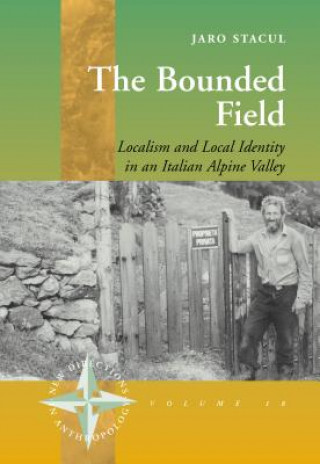
Regionalism is one of the most debated issues in contemporary Western Europe, yet why the region, instead of the nation-state, is appealed to in certain areas as a compelling formulation of selfhood remains largely unexplored. Drawing on ethnographic information collected in an Alpine valley in Trentino (northern Italy) in the 1990s, The Bounded Field explores issues of national, regional and local identity, and particularly the impact of the advent of regionalist political movements which stress northern Italy's partaking of a 'European culture'. It looks at the ways the ideologies of these movements are accommodated to local-level discourses, and particularly at how a post-peasant society interprets political symbols and other ideological messages emanating from regional, national and other centres. It focuses on how the imagery of the 'bounded field' is used by the inhabitants of an Alpine valley to describe their community in relation to a nation-state perceived as intrusive. The book sets out to complement existing studies on national and local identity in Europe, which look at local identity either as an 'invention' of political leaders, or as a concept that is constructed locally independently of outside forces. By examining how local identity is articulated on these different levels, The Bounded Field points to the dialectical process between 'above' and 'below' that accounts for the appeal of specific constructions of local identity. This dialectical process is examined by focusing on how elements of personal experience, ideas about gender, views about landscape, and particularly ideas about private property and community boundaries (expressed by the imagery of the 'bounded field') may form the background against which political issues are debated and understood. In examining this articulation, the book moves beyond a vision of politics as over and above social relations, and provides an alternative to theories of nationalism which take little account of the articulation between nationalist/regionalist ideologies and local-level discourses.


O knjigi
Angleščina
Kategorije

Podarite to knjigo še danes
To je povsem preprosto
1 Dodajte knjigo v košarico in izberite dostavo kot darilo 2 V zameno vam bomo poslali kupon 3 Knjiga bo dostavljena na naslov obdarovancaPozdravljeni! Sem Libroamiko, vaš knjižni svetovalec.
Kako vam lahko pomagam?