
 Kontakt
 Kako nakupovati
Dostava
Svetovalec pri nakupu
Borobudur
Historical Traces and Symbols of Buddha as well as World Tourist Attractions
 Angleščina
 80 b
80 b
Do 30 dni za vračilo

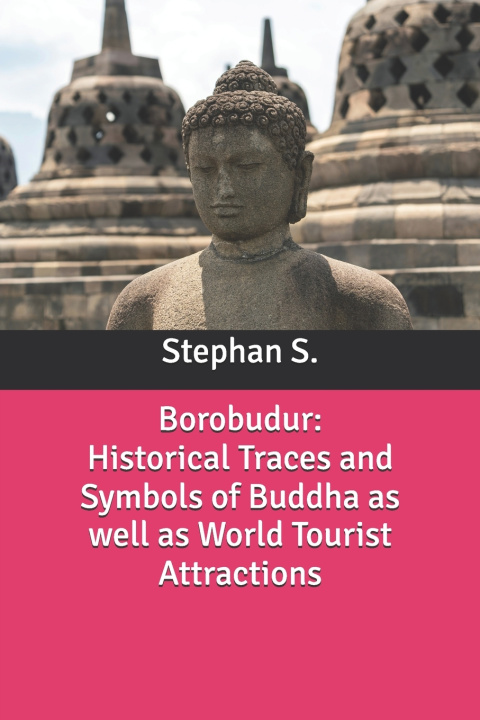
Borobudur: Historical Traces and Symbols of Buddha as well as World Tourist Attractions
Borobudur is not just a stone building that stands majestically on a hill in Magelang. It is a time travel experience-a long story about faith, intellectuality, art, and civilization that once reached the peak of its glory in the land of Java. When one stands in front of this temple, they are like entering a passage of history that connects the past with the present, ancient traditions with modernity, and spiritual values with daily life. It is not an exaggeration to say that Borobudur is one of the most mysterious and amazing human works ever born in Southeast Asia.
Located between Mount Merapi, Merbabu, Sumbing, and the Menoreh Hills, Borobudur stands in a landscape that seems to be designed by nature to embrace a great contemplative center. In the morning, a thin mist often falls over the temple's feet, creating a quiet and sacred atmosphere, as if nature is also taking care of the old secrets that are imprinted in its thousands of reliefs. Borobudur is not a place that was built by chance. Every stone, every direction, every layer, and every symbol in it was designed with full awareness of Buddhist cosmology and the worldview of ancient Javanese society.
Historians believe that Borobudur was built during the Syailendra Dynasty around the 8th to 9th centuries AD, when the central Java region became a rapidly developing intellectual and spiritual center. At that time, there was a harmonious blend of local culture, Mahayana Buddhist traditions, and the influence of international trade. The result is a magnificent monument that serves not only as a place of worship but also as an encyclopedia of stones-a living guide for pilgrims who want to understand the teachings and the inner journey to enlightenment.
Borobudur consists of more than two million blocks of andesite stone that are arranged without cement but are so sturdy that they can last more than a thousand years. The temple structure follows the shape of a giant mandala, depicting a Buddhist cosmology consisting of three worlds: Kamadhatu, Rupadhatu, and Arupadhatu. Ancient pilgrims walked in a circle from foot to top, reading relief after relief that recounted the moral journey of man, the life of the Buddha, and spiritual symbols to the highest consciousness. This temple is not only read with the eyes but is lived through steps.
But the journey to Borobudur is not always smooth. It was once buried in volcanic ash, forgotten for centuries, and even once considered lost. It was only in the 19th century that the world came to know this miracle again after mapping and cleaning efforts were carried out by the Dutch colonial government. Even so, Borobudur faces other threats: natural damage, rock weathering, looting of statues, and bomb incidents in the modern era. The miracle seems fragile if it is not for serious maintenance efforts.
The massive restoration carried out by UNESCO and the Government of Indonesia in 1970-1983 was an important turning point. This project not only saves the physical structure of the temple but also restores Borobudur as a symbol of national identity and world heritage. In 1991, UNESCO officially designated it as a World Heritage Site, recognizing the temple's universal value as a masterpiece of architecture, art, and human spirituality.
Today, Borobudur is a global tourism icon visited by millions each year. To protect the temple, the government enforces preservation measures, including restricted access to the upper levels and the use of electric transport within the area. Around it, tourist villages continue to grow, offering homestays, traditional cuisine, and local cultural experiences. Together, these efforts create a sustainable ecosystem that keeps Borobudur alive and relevant in the modern era.


O knjigi
Angleščina
Kategorije
