Brezplačna dostava za naročila nad 69,99 € na prevzemna mesta DPD in Express One.

Postanite del skupnosti ljubiteljev knjig z vsega sveta in uživajte v številnih ugodnostih.
Ustvarite brezplačen račun
Brezplačna dostava Zásilkovna nad 69.99 €
Zbirna točka GLS 4.49 €
Zbirna točka DPD 2.99 €
Kurirska služba GLS 5.49 €
Kurir DPD 3.49 €
Kurirska služba Express One 3.49 €
Zbirno mesto Express One 3.49 €
Zbirno mesto Pošte Slovenije 3.49 €
Dostava preko Pošte Slovenije 3.49 €
 Kontakt
 Kako nakupovati
Pomoč
Dostava
Zbirna točka GLS 4.49 €
Zbirna točka DPD 2.99 €
Kurirska služba GLS 5.49 €
Kurir DPD 3.49 €
Kurirska služba Express One 3.49 €
Zbirno mesto Express One 3.49 €
Zbirno mesto Pošte Slovenije 3.49 €
Dostava preko Pošte Slovenije 3.49 €
Brezplačna dostava Zásilkovna nad 69.99 €
Svetovalec pri nakupu
Moj račun
▸
Prazna :-(
0
Brezplačna dostava za naročila nad 69,99 € na prevzemna mesta DPD in Express One.
BLACK DRAGON LIZARD HANDBOOK
A Complete Guide to Black Dragon Lizard Care, Behavior, Habitat Setup, Feeding, Health, Breeding, and Responsible Long-Term Ownership
Jezik
 Angleščina
Angleščina
Knjiga
Mehka
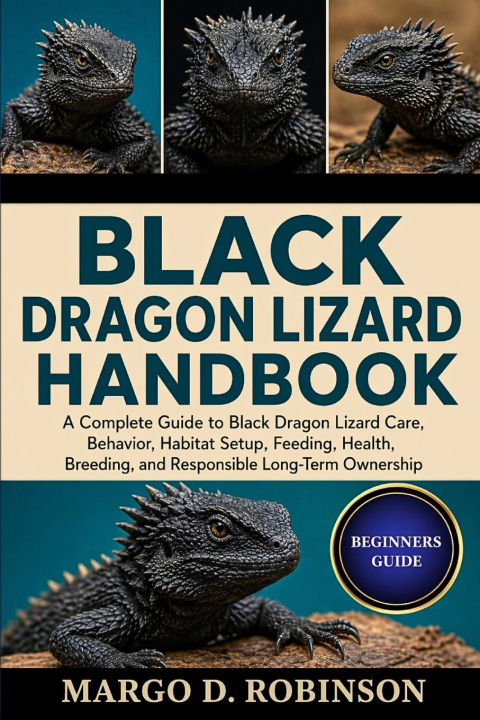
Introduction to the Black Dragon LizardA Name That Sparks CuriosityThe phrase "Black Dragon Lizard"...
Celoten opis
Koda Libristo: 52236404
?
 40 b
40 b
 Novo
Novo
40 b
Novo
16.67
€
Na zalogi pri dobavitelju
Odposlali bomo v 14-21 dneh
Do 30 dni za vračilo

Introduction to the Black Dragon Lizard
A Name That Sparks Curiosity
The phrase "Black Dragon Lizard" immediately evokes a sense of mystery and power. Even before people learn anything factual about the species, the name alone captures the imagination. It suggests something ancient, formidable, and almost mythical-a creature that seems as though it belongs in legends as much as in the natural world. This initial fascination is not accidental. Across cultures and generations, people have always been drawn to animals that embody strength, rarity, or unusual beauty, and the Black Dragon Lizard fits comfortably within that tradition.What makes this lizard especially intriguing is how it balances reality with perception. While it is very much a real reptile, adapted to specific environments and governed by biological rules, its appearance and behavior often feel larger than life. The dark, often near-black coloration, the textured scales, and the composed, watchful demeanor all contribute to an aura that feels almost symbolic. For many observers, the first encounter with a Black Dragon Lizard is not just a moment of observation but a lasting impression that blends curiosity with respect.
Origins and Natural Background
The origins of the Black Dragon Lizard are deeply rooted in the ecosystems it inhabits. Like many reptiles, it is the result of countless generations of adaptation, shaped by environmental pressures, climate, predators, and available food sources. Its dark coloration is not merely aesthetic-it is a functional trait. In many cases, darker pigmentation can help with thermoregulation, allowing the lizard to absorb heat more efficiently in cooler environments or during early morning hours when basking is essential for survival.
These lizards are often associated with rugged, sometimes harsh landscapes where survival depends on efficiency and awareness. Rocky terrains, forest edges, and semi-arid regions are common settings where such reptiles thrive. These environments demand resilience. Temperatures can fluctuate, food sources may not always be predictable, and shelter is often limited to natural formations such as crevices, burrows, or dense vegetation.
Over time, the Black Dragon Lizard has developed behaviors and physical traits that allow it to navigate these challenges with remarkable precision. Its movements are calculated, conserving energy while remaining ready to react quickly if needed. Its senses are finely tuned to detect subtle vibrations, movements, and changes in light. All of these characteristics contribute to its survival and reinforce the impression of a creature that is both ancient and highly specialized.
A Distinctive Appearance
One of the most compelling aspects of the Black Dragon Lizard is its appearance. While many lizards display bright colors or patterns for camouflage or communication, the Black Dragon Lizard stands out through its darker tones. This coloration can range from deep charcoal to a rich, glossy black, sometimes accented by subtle patterns or texture variations that become visible under certain lighting conditions.
Igralka
&
Poliglotka
EWA KASP
za
Predvajaj video


Libristo ima največjo izbiro tujejezične literature. Zato svoje knjige kupujem tukaj.
O knjigi
Polni naslov
BLACK DRAGON LIZARD HANDBOOK
Avtor
MARGO D. ROBINSON
Jezik
Angleščina
Angleščina
Vezava
Knjiga - Mehka
Datum izida
2026
Število strani
142
EAN
9798258878472
Koda Libristo
52236404
Založba
Independently published
Teža
201
Mere
152 x 229 x 8

Podarite to knjigo še danes
To je povsem preprosto
1 Dodajte knjigo v košarico in izberite dostavo kot darilo 2 V zameno vam bomo poslali kupon 3 Knjiga bo dostavljena na naslov obdarovanca
Knjižni svetovalec Libroamiko
Z uporabo tega klepeta komunicirate z generativno umetno inteligenco. Z njegovo uporabo se strinjate tudi z obdelavo osebnih podatkov.
Pozdravljeni! Sem Libroamiko, vaš knjižni svetovalec.
Kako vam lahko pomagam?
Pozdravljeni, sem Libroamiko, vam lahko pomagam?