Brezplačna dostava za naročila nad 69.99 € na paketomatih Pošte Slovenije.

Postanite del skupnosti ljubiteljev knjig z vsega sveta in uživajte v številnih ugodnostih.
Ustvarite brezplačen račun
Brezplačna dostava Zásilkovna nad 69.99 €
Zbirna točka GLS 4.49 €
Zbirna točka DPD 2.99 €
Kurirska služba GLS 5.49 €
Kurir DPD 3.49 €
Kurirska služba 3.49 €
Zbirno mesto 3.49 €
Zbirno mesto 3.49 €
Dostava preko Pošte Slovenije 3.49 €
 Kontakt
 Kako nakupovati
Pomoč
Dostava
Zbirna točka GLS 4.49 €
Zbirna točka DPD 2.99 €
Kurirska služba GLS 5.49 €
Kurir DPD 3.49 €
Kurirska služba 3.49 €
Zbirno mesto 3.49 €
Zbirno mesto 3.49 €
Dostava preko Pošte Slovenije 3.49 €
Brezplačna dostava Zásilkovna nad 69.99 €
Svetovalec pri nakupu
Moj račun
▸
Prazna :-(
0
Brezplačna dostava za naročila nad 69.99 € na paketomatih Pošte Slovenije.
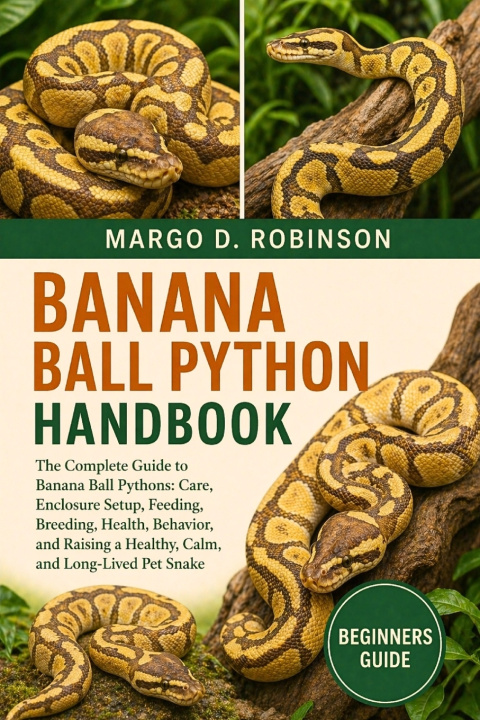
BANANA BALL PYTHON HANDBOOK
The Complete Guide to Banana Ball Pythons: Care, Enclosure Setup, Feeding, Breeding, Health, Behavior, and Raising a Healthy, Calm, and Long-Lived Pet Snake
Jezik
 Angleščina
Angleščina
Knjiga
Mehka
Introduction to the Banana Ball PythonA morph that captures attention instantlyThe Banana Ball Pytho...
Celoten opis
Koda Libristo: 52236399
?
 40 b
40 b
 Novo
Novo
40 b
Novo
16.65
€
Na zalogi pri dobavitelju
Odposlali bomo v 9-15 dneh
30 dni za vračilo blaga

Introduction to the Banana Ball Python
A morph that captures attention instantly
The Banana Ball Python stands out as one of the most visually striking and widely admired morphs within the world of captive reptiles. From the moment it is seen, it leaves a lasting impression. Its bright coloration, smooth patterns, and distinctive markings create an appearance that feels almost unreal, as though it were designed rather than naturally developed. Yet, despite this extraordinary look, the Banana Ball Python is not a separate species. It is a variation of the Ball Python, a snake already known for its calm temperament and suitability as a companion animal.This combination of beauty and manageable behavior is what makes the Banana Ball Python so compelling. It offers something rare-a visually stunning reptile that remains approachable, steady, and predictable in its nature. For many people, this balance is what draws them into the world of snake keeping, often making the Banana morph their first serious consideration.
The appeal is not limited to appearance alone. Over time, the Banana Ball Python reveals a depth that goes beyond color. Its patterns shift subtly with age, its behavior reflects the calm nature of its base species, and its presence in a home environment becomes something that blends curiosity with quiet companionship.
Understanding the banana morph
The term "banana" refers specifically to the coloration and pattern that define this morph. Unlike wild-type ball pythons, which typically display darker browns and blacks, the Banana morph replaces much of that darkness with vibrant yellows, soft purples, and scattered markings that resemble freckles across the body.
These colors are not random. They follow a genetic pattern that has been selectively developed through breeding. The result is a snake that appears brighter, softer, and more visually dynamic than its wild counterparts. The yellow tones often deepen or shift as the snake matures, creating a living transformation that continues over time.
The presence of purple hues, especially in younger individuals, adds another layer of uniqueness. These tones gradually fade or change as the snake ages, giving each individual a slightly different visual journey. No two Banana Ball Pythons look exactly the same, even when they share the same genetic foundation.
This variability is part of what makes the morph so fascinating. It is not a static design but a dynamic expression of genetics, where color and pattern evolve alongside the snake itself.
Origins within captive breeding
The Banana Ball Python did not emerge in the wild. It is a product of captive breeding, developed through careful observation and selection of genetic traits. Breeders identified the unique coloration early on and began refining it, pairing individuals in ways that would reliably reproduce the desired appearance.
This process required patience and precision. Each generation revealed new variations, allowing breeders to better understand how the trait was inherited. Over time, the Banana morph became more stable, making it possible to produce snakes with consistent and recognizable characteristics.
Igralka
&
Poliglotka
EWA KASP
za
Predvajaj video


Libristo ima največjo izbiro tujejezične literature. Zato svoje knjige kupujem tukaj.
O knjigi
Polni naslov
BANANA BALL PYTHON HANDBOOK
Avtor
MARGO D. ROBINSON
Jezik
Angleščina
Angleščina
Vezava
Knjiga - Mehka
Datum izida
2026
Število strani
156
EAN
9798258874870
Koda Libristo
52236399
Založba
Independently published
Teža
219
Mere
152 x 229 x 8

Podarite to knjigo še danes
To je povsem preprosto
1 Dodajte knjigo v košarico in izberite dostavo kot darilo 2 V zameno vam bomo poslali kupon 3 Knjiga bo dostavljena na naslov obdarovanca
Knjižni svetovalec Libroamiko
Z uporabo tega klepeta komunicirate z generativno umetno inteligenco. Z njegovo uporabo se strinjate tudi z obdelavo osebnih podatkov.
Pozdravljeni! Sem Libroamiko, vaš knjižni svetovalec.
Kako vam lahko pomagam?
Pozdravljeni, sem Libroamiko, vam lahko pomagam?