
 Kontakt
 Kako nakupovati
Dostava
Svetovalec pri nakupu
 Angleščina
 32 b
32 b
 Novo
Novo
Do 30 dni za vračilo

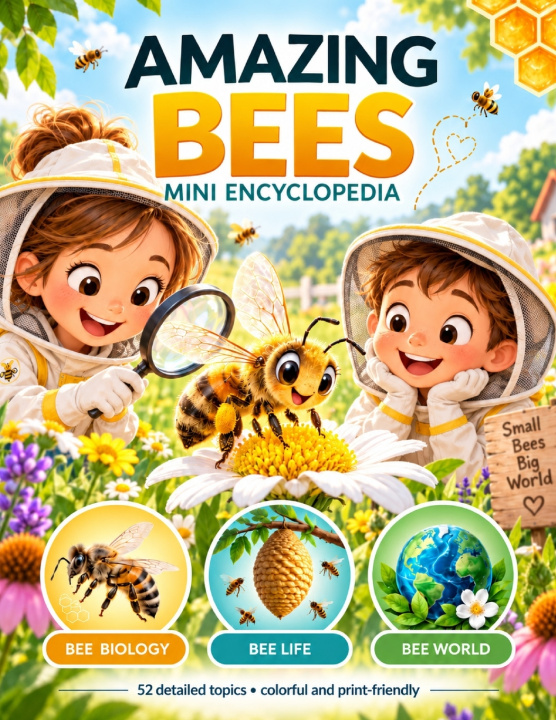
Enter the fascinating world of bees with Amazing Bees: Mini Encyclopedia, a clear, colorful science guide created for curious young readers who want to understand how bees live, work, communicate, pollinate, and survive.
Across 52 detailed topics, readers move step by step from basic bee biology to biodiversity, colony life, pollination, intelligence, seasonal survival, ecology, and conservation. The book introduces more than just the familiar honey bee. Children discover bumblebees, mason bees, leafcutter bees, mining bees, carpenter bees, sweat bees, stingless bees, and the important differences between solitary and social species.
Young readers will explore the bee body, compound eyes and ultraviolet vision, antennae, wings, flight, legs, pollen baskets, and other adaptations. They will learn how a honey bee colony functions, what queens, workers, and drones do, how bees develop from egg to adult, how wax comb is built, how nectar becomes honey, and why pollen, bee bread, and royal jelly matter.
The journey continues into one of the most important roles bees play in nature: pollination. Readers learn how pollen moves between flowers, why pollination supports wild plants and food crops, how buzz pollination works, how bees find rewarding flowers, what the waggle dance communicates, how pheromones carry chemical messages, and how bees can learn and remember.
The final sections look at real challenges bees face, including habitat loss, flower shortages, pesticides, air pollution, climate change, predators, Varroa mites, disease, and colony stress. The book also explains practical ways people can support bees by protecting habitat, planting useful flowers, providing nesting opportunities, and reducing unnecessary pesticide exposure.
Each topic is organized into easy-to-follow sections such as Overview, Explore the Topic, At a Glance, Deep Dive, key vocabulary, and Did You Know? facts. A reference guide at the end points readers toward respected scientific and conservation organizations used as reference points for the educational content.
Amazing Bees: Mini Encyclopedia is a strong choice for children ages 8-12, parents, teachers, homeschool families, nature clubs, and young readers interested in insects, biology, ecology, pollination, biodiversity, and the natural world.
A small insect can make a very big difference. This book shows young readers why.


O knjigi
Angleščina
Kategorije

Podarite to knjigo še danes
To je povsem preprosto
1 Dodajte knjigo v košarico in izberite dostavo kot darilo 2 V zameno vam bomo poslali kupon 3 Knjiga bo dostavljena na naslov obdarovancaPozdravljeni! Sem Libroamiko, vaš knjižni svetovalec.
Kako vam lahko pomagam?